Quang Phu Cau Incense Village
The village south of Hanoi where thousands of red incense sticks are fanned out to dry in the sun — one of Vietnam’s most photographed craft villages.
- Hanoi
- Included in 1 tour
- Tours from $65
- Updated October 2026
About the Incense Village in Hanoi
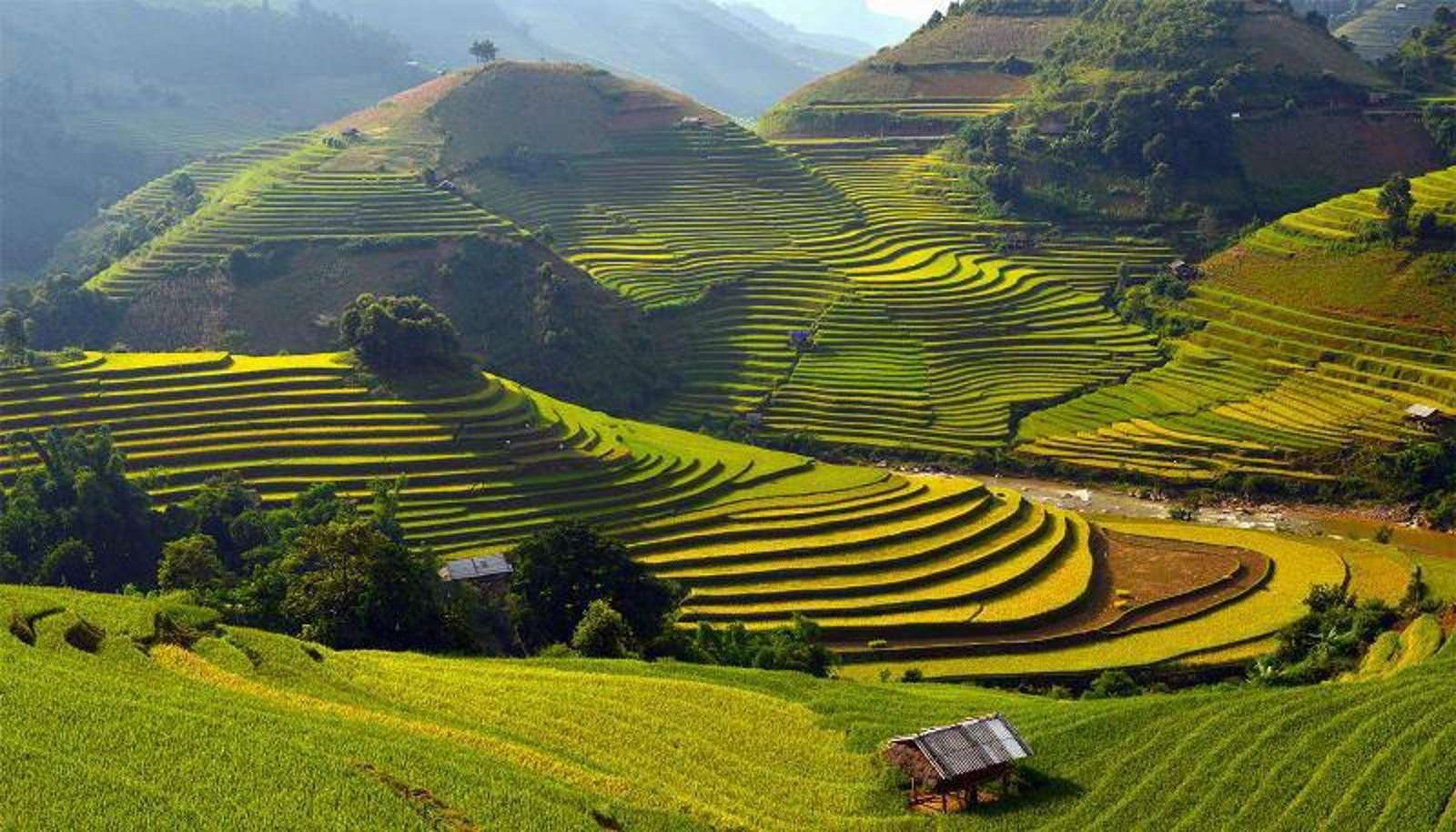
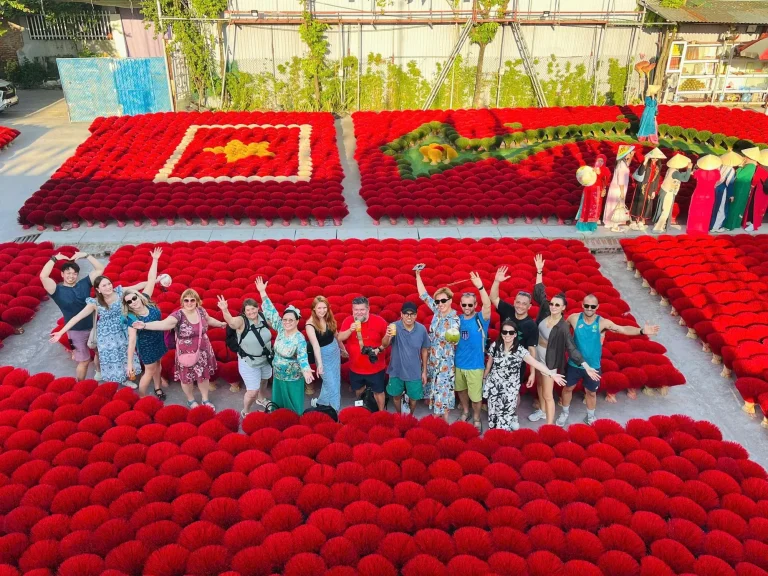
Quang Phu Cau is the incense village Hanoi locals and photographers talk about: a rural commune about 35–40 km south of the city where thousands of families make incense sticks and bamboo sticks for incense. On dry, sunny days, bundles of bright red and magenta sticks are fanned out like flowers in yards, on roadsides and on rooftops to dry — a sight that has made the village famous on social media.
The craft has been practised here for generations, and today it supports around 3,000 families. Most incense in Vietnam is burned daily on home and shop altars and at pagodas and temples, and demand peaks before Tet (Lunar New Year), so the village is busiest and most colourful from autumn into January.
How incense is made in Quang Phu Cau
Bamboo is split into thin sticks and dried. The base of each stick is dyed red or another bright colour, which is the part you see fanned out in the yards. The upper part is then coated with a paste of sawdust, natural resins and aromatic powders, rolled by hand or machine, and sun-dried again until hard. Some families specialise in sticks, others in the paste or in finished incense, and much of the work still happens in family courtyards.
Visiting the Quang Phu Cau incense village
The village itself is free to walk around. The most photogenic drying yards are set up for visitors with platforms and props, and usually charge a photo fee. Remember that this is a working village: the incense is a product, not a decoration, so move carefully around the drying bundles.
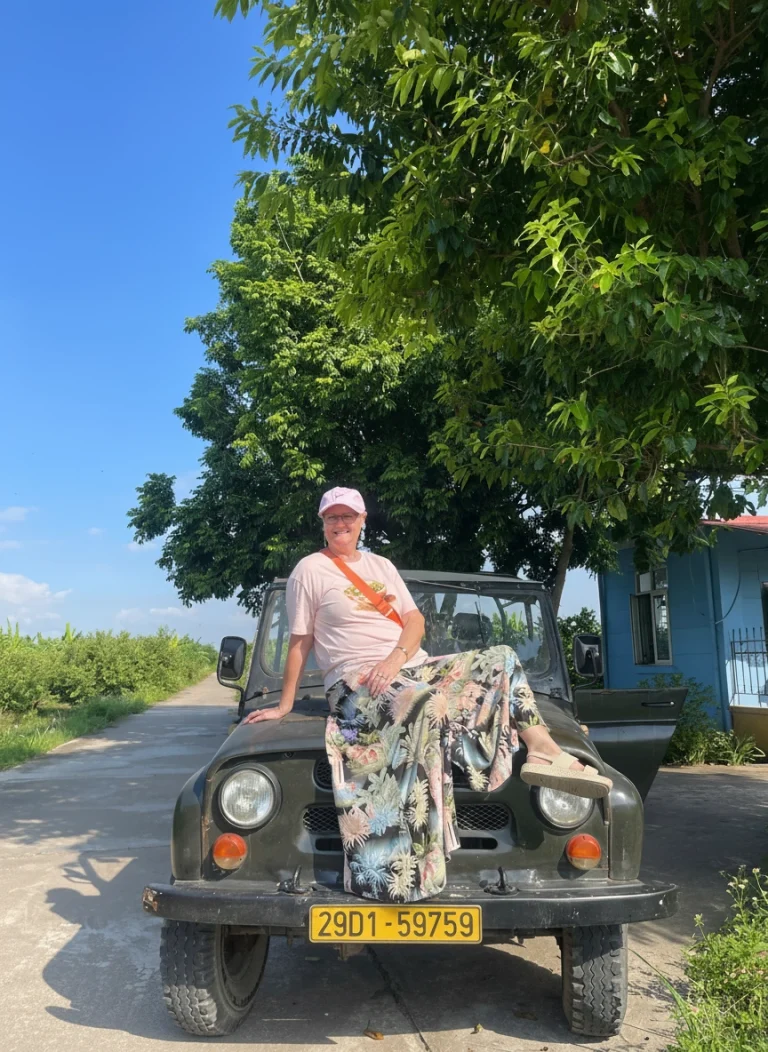
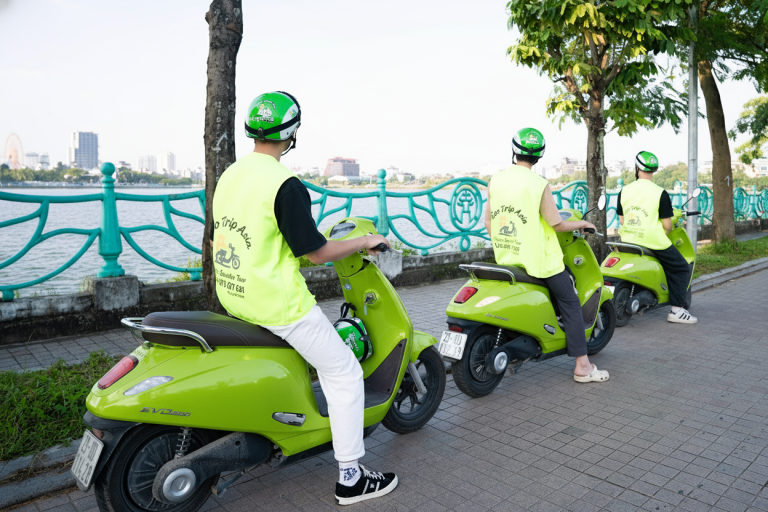
Our Instagram tour goes there by vintage army jeep or green limo, with a guide who helps with photos, a hands-on incense workshop with local artisans and a visit to the nearby Chuong conical hat village.
Is the incense village worth visiting?
Yes, especially for photographers. On dry, sunny days the yards of Quang Phu Cau are fanned out with thousands of bright red and magenta incense sticks, a sight that is at its most colourful from September to January, in the run-up to Tet. The village is free to walk, though the set-up photo yards with platforms and props charge a fee. Remember it is a working village – the incense is a product, so move carefully around the drying bundles.
Worth it?
Why visit Quang Phu Cau Incense Village?
- Fields of red incenseThousands of sticks fanned out to dry in the sun.
- A living craft villageAround 3,000 families work in incense making.
- Hands-on workshopsSee every stage and roll incense yourself.
- Peak season before TetThe most colour and activity from autumn to January.
- Nearby conical hat villageEasy to combine with Chuong village in one trip.
Make the most of it
7 best things to do in Quang Phu Cau Incense Village
Photograph the drying yards
The best-known yards arrange incense in circles and fan shapes, with raised platforms for wide shots. Expect a photo fee of about 50,000–100,000 VND per person.
See how incense is made
Visit a family workshop to see sticks being split, dyed, coated and rolled. Ask before filming close up.
Try rolling incense yourself
Many workshops let visitors roll a few sticks by hand. It is included on our tour.
Walk the village lanes
Away from the photo yards, incense dries along roads, on rooftops and in alleys — less polished but more real.
Dress up for photos
Some yards rent ao dai and conical hats; on our tour you can also add an ao dai rental or a retro Fujifilm camera experience.
Combine with Chuong conical hat village
About half an hour away, Chuong village makes Vietnam’s iconic non la hats by hand.
Join our Instagram tour
About 4.5 hours from Hanoi by jeep or green limo, with photo help, the incense workshop and the conical hat village.
Good to know
Photo guide: how to get the best incense shots
| Best light | Mid-morning to early afternoon on sunny days for bright colours |
|---|---|
| Best months | September to January, especially the weeks before Tet |
| Rainy days | Incense is usually kept inside, so there may be little to see |
| Wide shots | Use the raised platforms in the main yards |
| Close-ups | Fill the frame with the red sticks for a strong pattern |
| Outfits | Plain white, yellow or traditional ao dai stand out against red |
| Drones | Some yards allow them — ask first |
Timing
Best time to visit Quang Phu Cau Incense Village
Peak production, the most colour and the busiest yards.
Incense is only laid out to dry in good weather; check the forecast.
Cooler and quieter; yards fill up as the sun climbs.
Frequent showers mean less incense outside; go on a dry spell.
Many families stop work for the holiday, so there may be little to see.
Plan your visit
Half-day plan: our incense village Instagram tour
Into the countryside
Leave Hanoi by vintage jeep or green limo for the villages south of the city.
Quang Phu Cau drying yards
Photograph the bright bundles of incense with your guide’s help.
Incense workshop
See how incense is made and roll some yourself.
Conical hat village
Watch craftsmen make non la hats in nearby Chuong village.
Return to Hanoi
Back at your hotel after about 4.5 hours.
Map & directions
How to get to Quang Phu Cau Incense Village
- By car or GrabAbout 35–40 km, roughly 1–1.5 hours from the Old Quarter. Around 400,000–600,000 VND each way.
- By motorbikePossible for confident riders; the last stretch is on village roads.
- By busCity buses run towards Ung Hoa, but connections to the village are slow.
- With usOur Instagram tour includes Old Quarter pickup, transport by jeep or limo and entrance fees.
Eat like a local
Where to eat near Quang Phu Cau Incense Village
- Village snacksSimple stalls sell drinks and snacks near the main yards; bring water on hot days.
- Bun and pho stallsSmall noodle shops on the main roads through the commune.
- Lunch back in HanoiMost visitors eat before or after the trip in the city.
For your camera
Best photo spots at Quang Phu Cau Incense Village
- Circular incense displaysFans of red sticks arranged in rings — the classic shot.
- Raised platformsTop-down views over several displays at once.
- Workshop doorwaysArtisans at work with stacks of sticks behind.
- Rooftop dryingIncense on rooftops and walls along the village lanes.
Local advice
Tips for visiting Quang Phu Cau Incense Village
Do
- Check the weather — sunny days are essential
- Carry small notes for photo fees
- Ask before photographing people at work
- Wear a hat and sunscreen
- Buy a bundle of incense to support the families
Don’t
- Step on or move the drying incense
- Treat the yards like a studio — people are working
- Visit in heavy rain and expect displays
- Fly a drone without asking
- Expect much food in the village itself
Visit with a local
Tours that visit Quang Phu Cau Incense Village
Hanoi · Instagram & Photo
Quang Phu Cau Incense Village Instagram Tour from Hanoi
459+ booked
From $78
$65
per adult
Good to know
Quang Phu Cau Incense Village: questions & answers
Where is the incense village in Hanoi?
Quang Phu Cau incense village is in the Ung Hoa area, about 35–40 km south of central Hanoi, roughly 1–1.5 hours by car.
Is there an entrance fee for Quang Phu Cau incense village?
The village is free, but the popular drying yards usually charge a photo fee of about 50,000–100,000 VND per person.
When is the best time to visit the incense village?
On sunny days from September to January, especially in the weeks before Tet, when production and colour are at their peak.
How is incense made in Quang Phu Cau?
Bamboo is split into sticks, the bases are dyed, and the tops are coated with a paste of sawdust, resin and aromatic powders, then sun-dried.
Is the incense village Hanoi worth visiting?
Yes, if you enjoy photography and craft villages. Go on a dry day, and combine it with Chuong conical hat village.
Can I visit the incense village and conical hat village together?
Yes. Chuong village is about half an hour away, and our Instagram tour visits both.
Can I make incense myself?
Yes, many workshops let visitors roll a few sticks. It is included on our tour.
How far is Quang Phu Cau incense village from Hanoi?
About 35–40 km south of the Old Quarter, roughly 1–1.5 hours by car depending on traffic.
Do I have to pay for photos at Quang Phu Cau incense village?
Walking around the village is free, but the most photogenic drying yards are set up for visitors with platforms and props and usually charge a photo fee of about 50,000 to 100,000 VND per person. It is a working village, so step carefully around the bundles of drying incense.
What is the best time of day to visit the incense village?
Come on a dry, sunny day, when the drying yards are busiest and brightest, roughly 8:00 to 16:00. Across the year, September to January is the most colourful stretch as the village works towards the Tet peak; rain keeps the sticks indoors, so avoid wet days.
Hanoi