Long Bien Bridge
Hanoi’s century-old iron bridge over the Red River, built by the French, bombed in the war and still crossed by trains and scooters every day.
- Hanoi
- Included in 14 tours
- Tours from $25
- Updated October 2026



About Long Bien Bridge
Long Bien Bridge is Hanoi’s most famous bridge and one of the city’s great symbols: a long, rusty, patched-up steel truss that carries trains, scooters and pedestrians across the Red River from the edge of the Old Quarter. Walking out onto it, with the trains rattling past and the river, banana fields and sandbanks below, is one of the most memorable things you can do in Hanoi.
History: from Paul Doumer Bridge to Long Bien
The bridge was built between 1899 and 1902 to a design by the Paris firm Daydé & Pillé, and was opened in 1902–1903 under the name Paul Doumer Bridge, after the Governor-General of French Indochina. Thousands of Vietnamese labourers worked on it. With its approach viaducts it is nearly 2.3 km long, and at the time it was among the longest bridges in Asia. It linked Hanoi with the port of Hai Phong and the north-east, and after 1954 it was renamed Long Bien.
The bridge in wartime
During the American war, Long Bien was the only crossing of the Red River into Hanoi and a vital supply line, so it was bombed many times between 1967 and 1972. Spans were cut, repaired, cut again and repaired again, often overnight. Look closely and you can see the difference between the original curved trusses and the flatter replacement sections. The bridge became a symbol of the city’s resilience, and Hanoians are deeply attached to it.
Long Bien Bridge today
Cars are not allowed. The centre carries a single railway track, still used by trains to and from Long Bien station, and on each side there is a narrow lane for motorbikes and bicycles with a footpath on the outer edge. Traffic keeps to the left, unlike the rest of Vietnam. The deck is regularly repaired — most recently it closed to vehicles from late March to 28 May 2026 — and studies supported by France have looked at how to preserve the bridge for the future.
Almost all our Hanoi tours cross or stop at Long Bien Bridge — 14 in total, by jeep, electric scooter, e-bike, with our Green Sisters riders or with a photographer — often with a visit to the farms of Banana Island below.
Is Long Bien Bridge worth visiting?
Yes – it is one of Hanoi’s great symbols. Built in 1902 to a Daydé & Pillé design, bombed and patched repeatedly during the war, the long rusty truss still carries a railway, motorbikes and pedestrians across the Red River. Walking out onto the footpath, with trains rattling past and banana fields on the sandbanks below, is one of the most atmospheric free things to do in the city. It combines naturally with the farms of Banana Island beneath it and the Long Bien wholesale market at the Old Quarter end.
Worth it?
Why visit Long Bien Bridge?
- Over 120 years of historyBuilt by the French in 1899–1902 and still in daily use.
- Wartime scarsBombed repeatedly between 1967 and 1972; the patched spans tell the story.
- Trains, scooters and walkersA working bridge where trains pass just a metre or two from the footpath.
- Red River viewsSandbanks, banana fields, fishing boats and the city skyline.
- Sunset and sunriseSome of the best light in Hanoi, especially from the middle of the bridge.
- Banana Island belowStairs from the bridge lead down to the farmland in the middle of the river.
Make the most of it
8 best things to do in Long Bien Bridge
Walk out to the middle
Start from the Old Quarter end near Long Bien station and walk the footpath. 15–20 minutes gets you to the middle of the river; the full crossing takes about 30 minutes each way.
Watch a train go by
Trains cross several times a day. Stay on the footpath — never stand on the tracks — and you will feel the bridge shake as they pass.
Catch the sunset
Face west towards the city. Sunset is roughly 17:15 in winter and up to about 18:40 in June; arrive 30 minutes early.
Look for the old and new spans
Original French trusses have curved tops; spans replaced after the bombing are straighter and plainer.
Go down to Banana Island
About halfway across, a staircase leads down to the farmland and banana groves of the island in the river. Check the stairs are open and the river is low.
See Long Bien market at night
Under the bridge’s western end, a wholesale fruit and vegetable market works roughly 22:00–6:00, busiest around 2:00–4:00. Visit with a local and keep out of the porters’ way.
Compare with Chuong Duong Bridge
Just downstream, Chuong Duong Bridge (1985) was the first major Red River bridge designed and built by Vietnamese engineers. It carries cars and has good views of Long Bien.
Cross with us
Our jeep, electric scooter, Green Sisters, e-bike and Instagram tours ride across or stop on the bridge for photos, many with a visit to a family on Banana Island.
Good to know
Bridge facts: Long Bien Bridge in numbers
| Built | 1899–1902; opened 1902–1903 |
|---|---|
| Designer | Daydé & Pillé, Paris |
| Original name | Paul Doumer Bridge |
| Length | Nearly 2.3 km including the approach viaducts |
| Bombed | Repeatedly from August 1967 to 1972 |
| Who can use it | Trains, motorbikes, bicycles and pedestrians — no cars |
| Traffic | Drives on the left |
| Neighbour | Chuong Duong Bridge, opened 1985, just downstream |
Timing
Best time to visit Long Bien Bridge
Soft light, mist on the river and farmers heading out; the sun rises over the Long Bien side.
The most popular time: golden light on the steel and the city.
The bridge is dark, so walk carefully; Long Bien market below is in full swing after midnight.
Cooler and clearer, though winter mornings can be grey and misty. Summer brings heat and storms, but a fuller river.
Map & directions
How to get to Long Bien Bridge
- From the Old QuarterThe western end is 10–15 minutes’ walk from Dong Xuan Market. Climb up beside Long Bien station or the stairs on Tran Nhat Duat street.
- By Grab or taxiCars cannot go on the bridge; ask to be dropped at Long Bien station (Ga Long Bien), then walk up.
- By motorbike or bicycleAllowed in the side lanes. Remember: traffic on the bridge keeps left.
- With usFree Old Quarter hotel pickup; we ride onto the bridge and stop at a safe point for photos.
Eat like a local
Where to eat near Long Bien Bridge
- Long Bien station cafésSmall cafés by the station and along the railway serve coffee with views of the trains.
- Dong Xuan Market food courtBun, banh cuon and sweet soups, 10 minutes’ walk away; open about 6:00–18:00.
- Night stalls at Long Bien marketLate-night pho, crab noodle soup and sticky rice for the market workers.
- Old Quarter street foodPho, bun cha and banh mi are all within 15 minutes’ walk.
For your camera
Best photo spots at Long Bien Bridge
- Middle of the bridge at sunsetThe steel trusses leading towards the city skyline.
- A passing trainFrom the footpath, with a safe distance — trains are faster than they look.
- From Banana Island belowThe whole bridge above the banana trees.
- From Chuong Duong BridgeA side view of the full length of Long Bien.
Local advice
Tips for visiting Long Bien Bridge
Do
- Stay on the footpath and keep children close
- Wear flat shoes — the walkway has gaps and uneven slabs
- Bring water in the hot months; there is no shade
- Keep phones and bags away from the scooter lane
- Check for repair closures before you plan a ride across
Don’t
- Stand or pose on the railway tracks
- Lean over damaged railings
- Walk the bridge alone late at night
- Drive on the right — traffic here keeps left
Visit with a local
Tours that visit Long Bien Bridge




Hanoi · Electric Scooter
Hanoi Electric Scooter City Highlights Tour
234+ booked
From $45
$38
per adult

Hanoi · Electric Scooter
Hanoi Half-Day Electric Scooter City Tour
463+ booked
From $60
$51
per adult

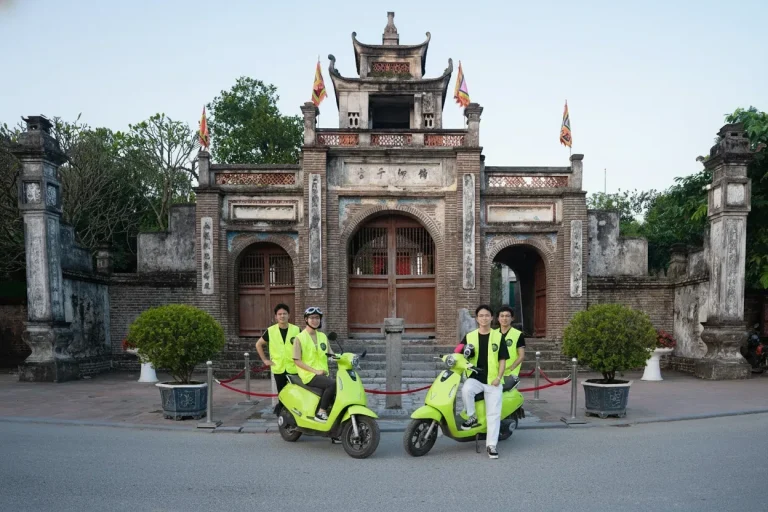
Hanoi · Electric Scooter
Hanoi Electric Scooter Tour to Co Loa Citadel & Countryside
475+ booked
From $70
$60
per adult

Hanoi · Electric Scooter
Hanoi Sunrise & Sunset Electric Scooter Tour
678+ booked
From $60
$51
per adult

Hanoi · Electric Scooter
Hanoi Female Riders City Highlights Tour
345+ booked
From $47
$40
per adult
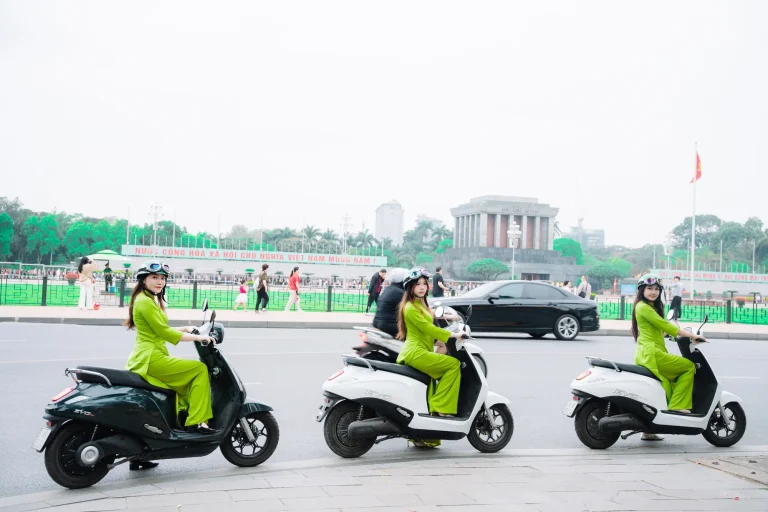
Hanoi · Electric Scooter
Hanoi Half-Day City Tour with Female Riders
876+ booked
From $62
$53
per adult
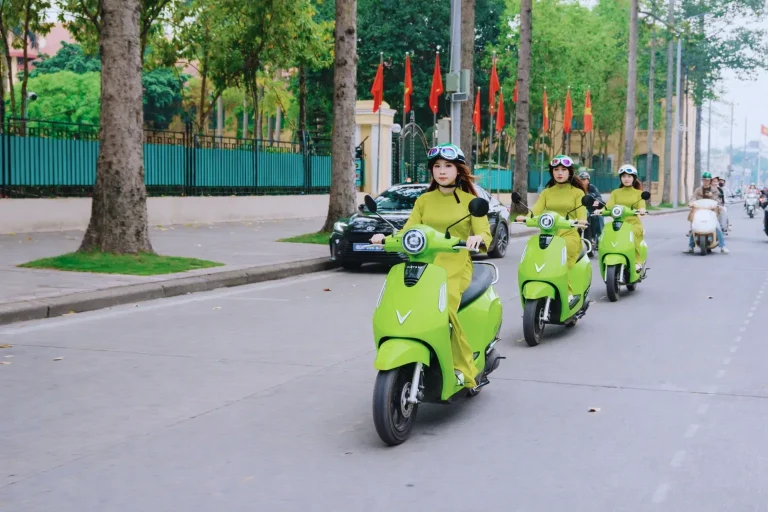
Hanoi · Electric Scooter
Hanoi Street Food Tour with Female Riders
786+ booked
From $72
$62
per adult

Hanoi · Electric Scooter
Co Loa Citadel & Countryside Tour with Female Riders
567+ booked
From $72
$62
per adult

Hanoi · E-Bike
Hanoi Self-Ride E-Bike City Tour: Lakes, Riverside & Hidden Gems
576+ booked
From $60
$45
per adult

Hanoi · Instagram & Photo
Hanoi Instagram Tour: City Highlights by Jeep, Limo or Motorbike
397+ booked
From $72
$60
per adult
Good to know
Long Bien Bridge: questions & answers
Can you walk across Long Bien Bridge?
Yes. There is a narrow footpath on each side. The full crossing takes about 30 minutes each way; most people walk to the middle and back.
When was Long Bien Bridge built?
Between 1899 and 1902, by the French. It was designed by Daydé & Pillé of Paris and first named Paul Doumer Bridge.
Is Long Bien Bridge safe?
It is safe if you stay on the footpath, watch for gaps and keep away from the tracks and the scooter lane. Avoid walking alone late at night.
Do trains still run on Long Bien Bridge?
Yes. A single railway track runs down the centre, used by trains to and from Long Bien station several times a day.
What is the best time to visit Long Bien Bridge?
Late afternoon for the sunset, or early morning for soft light and the market below.
Can cars cross Long Bien Bridge?
No. Only trains, motorbikes, bicycles and pedestrians may use it; cars use Chuong Duong and other bridges.
Why does traffic drive on the left on Long Bien Bridge?
The lanes are arranged on each side of the central railway, and traffic has long kept to the left there, unlike the rest of Vietnam.
Was Long Bien Bridge bombed in the war?
Yes, many times between 1967 and 1972, because it was the only Red River crossing into Hanoi. It was repaired each time and is now a symbol of the city’s resilience.
Is Long Bien Bridge worth visiting?
Yes. The 1902 steel bridge, bombed and rebuilt many times during the war, is one of Hanoi's most atmospheric landmarks, and it is free to walk onto. Pair it with the farms of Banana Island below and the Long Bien market at the Old Quarter end; allow 30 to 60 minutes.
How do I get onto Long Bien Bridge on foot?
Join it from the north-east edge of the Old Quarter near the Long Bien market and station. There is a narrow footpath on the outer edge of each side, with motorbike lanes inside it and a single railway track down the middle, so keep to the footpath and mind the trains. Note that traffic on the bridge keeps to the left.
Hanoi