Cat Cat Village
A Black Hmong village of wooden houses, craft workshops and a waterfall, just below Sapa town.
- Sapa
- Included in 2 tours
- Tours from $50
- Updated October 2026
About Cat Cat Village
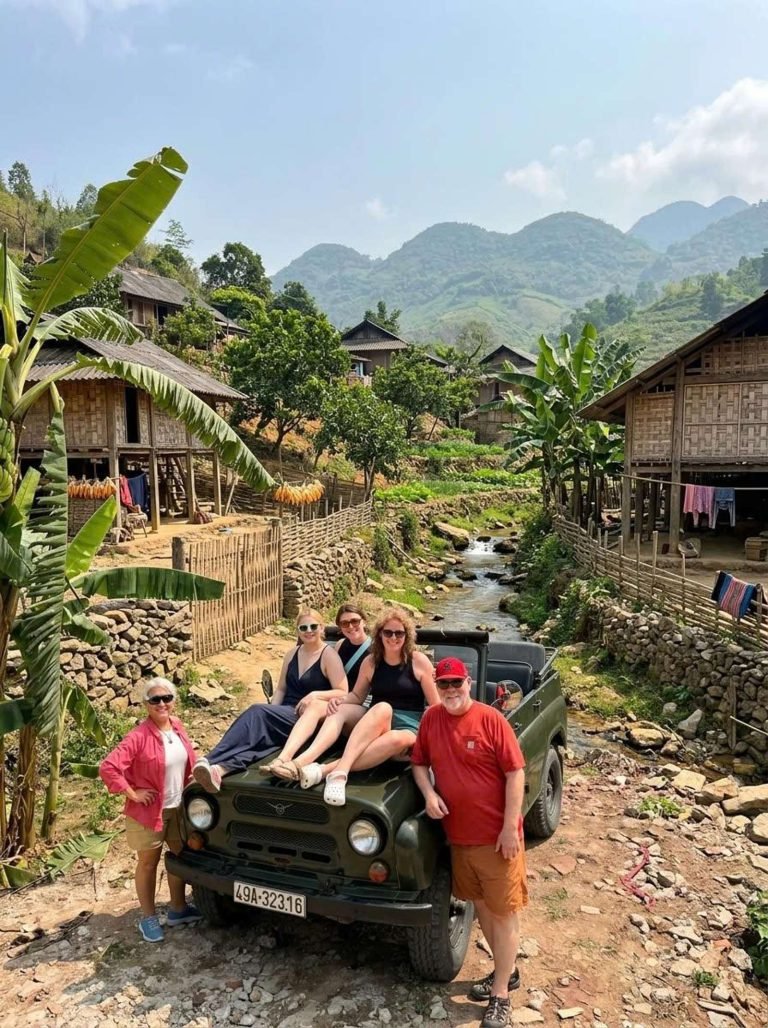
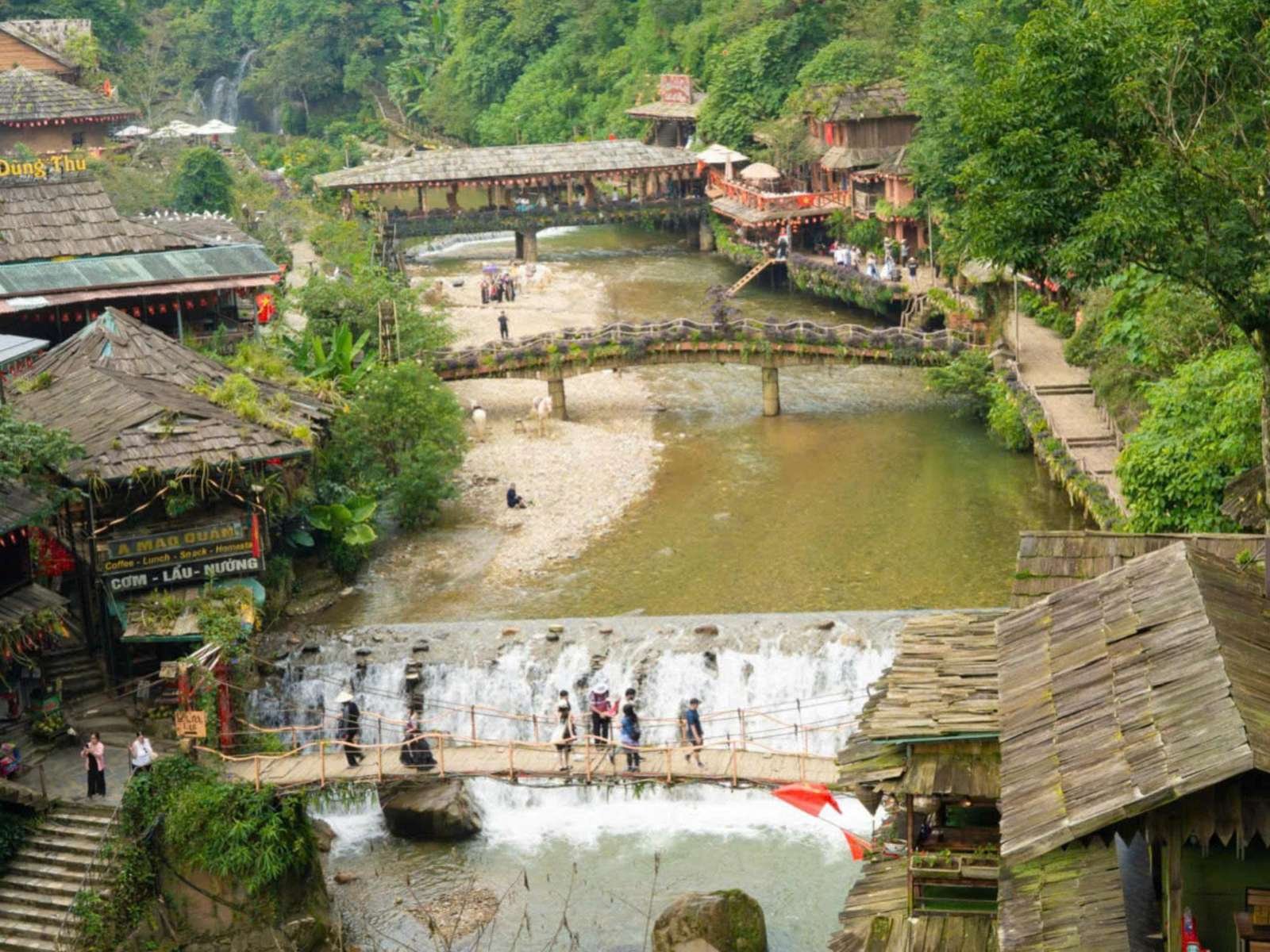
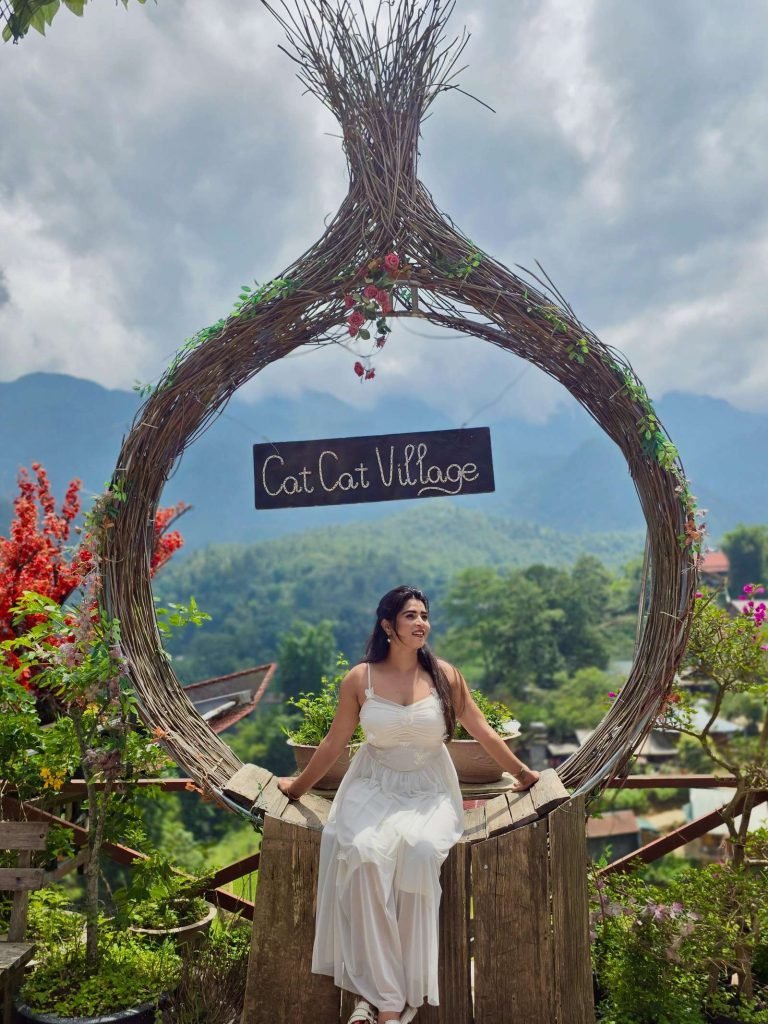
Cat Cat village is a Black Hmong village in the valley just below Sapa town, about 2–3 km from the square. Stone paths and steps lead down past wooden houses, craft workshops and terraces to a waterfall, wooden bridges and an old hydro station, before climbing back up the other side of the valley.
It is the most visited village near Sapa, and the easiest to reach. That means it is more developed than villages such as Lao Chai: there is an entrance ticket, cafés, souvenir stalls, costume rental and a performance stage. But families still live here, and it is a good introduction to Hmong crafts and architecture if your time is short.
Crafts and daily life
The Black Hmong are known for their hemp cloth dyed deep blue-black with indigo, for batik made with beeswax, and for silver jewellery. In Cat Cat you can watch women spinning and weaving, see indigo vats and buy directly from the makers. Traditional houses have earthen floors, wooden walls and a central fire, with a loft for storing corn and rice.
The Cat Cat waterfall and hydro station
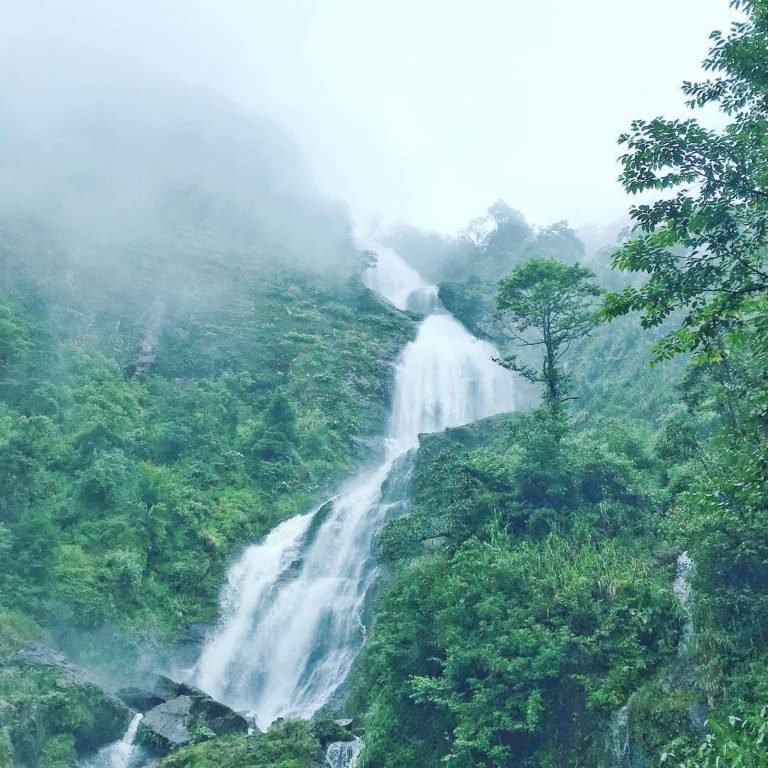
At the bottom of the village the stream tumbles over rocks in a series of cascades, often called Tien Sa waterfall. Nearby stands a small hydroelectric station from the French period, once used to supply electricity to Sapa town. Wooden and suspension bridges, water wheels and rice-pounding mortars make this the most photographed corner of the village.
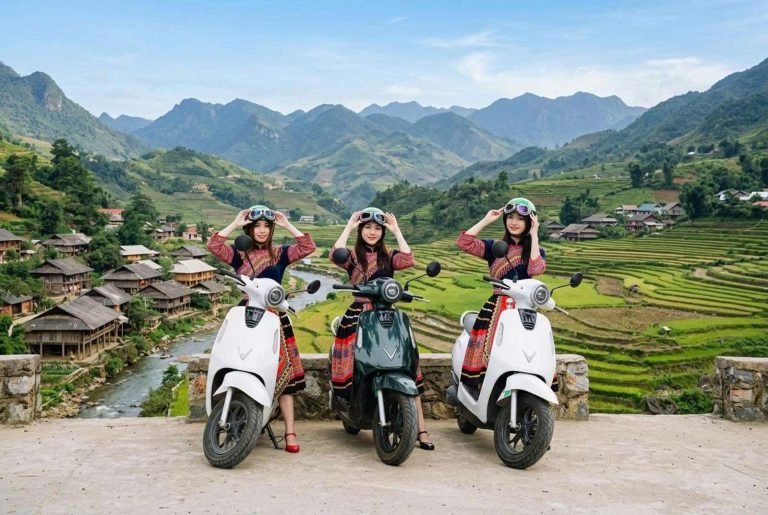
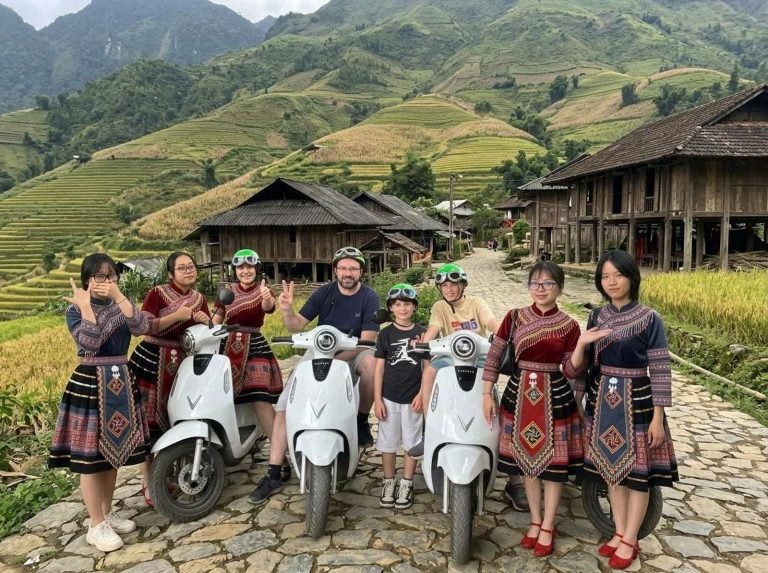
Our Instagram tour with female riders and the full-day Sapa motorbike tour start the morning in Cat Cat, with plenty of time for photos. The village ticket and costume rental are paid on site, and your rider drops you near the entrance to save the steep road.
Is Cat Cat village worth visiting?
Yes, especially if your time is short – it is the closest and easiest village to Sapa, about 2–3 km from the square, and a good first taste of Black Hmong crafts and architecture. It is more developed than villages like Lao Chai, with a ticket, cafés, costume rental and a performance stage, but families still live here and the walk down to the Tien Sa waterfall, wooden bridges and old French hydro station is lovely. Note there are many stone steps down and back up.
Worth it?
Why visit Cat Cat Village?
- Black Hmong craftsWeaving, indigo dyeing, batik and silver jewellery made in front of you.
- Waterfall and bridgesCascades, wooden bridges and water wheels at the heart of the village.
- French-era hydro stationA small colonial power station by the stream.
- Traditional housesWooden Hmong homes with earthen floors and corn lofts.
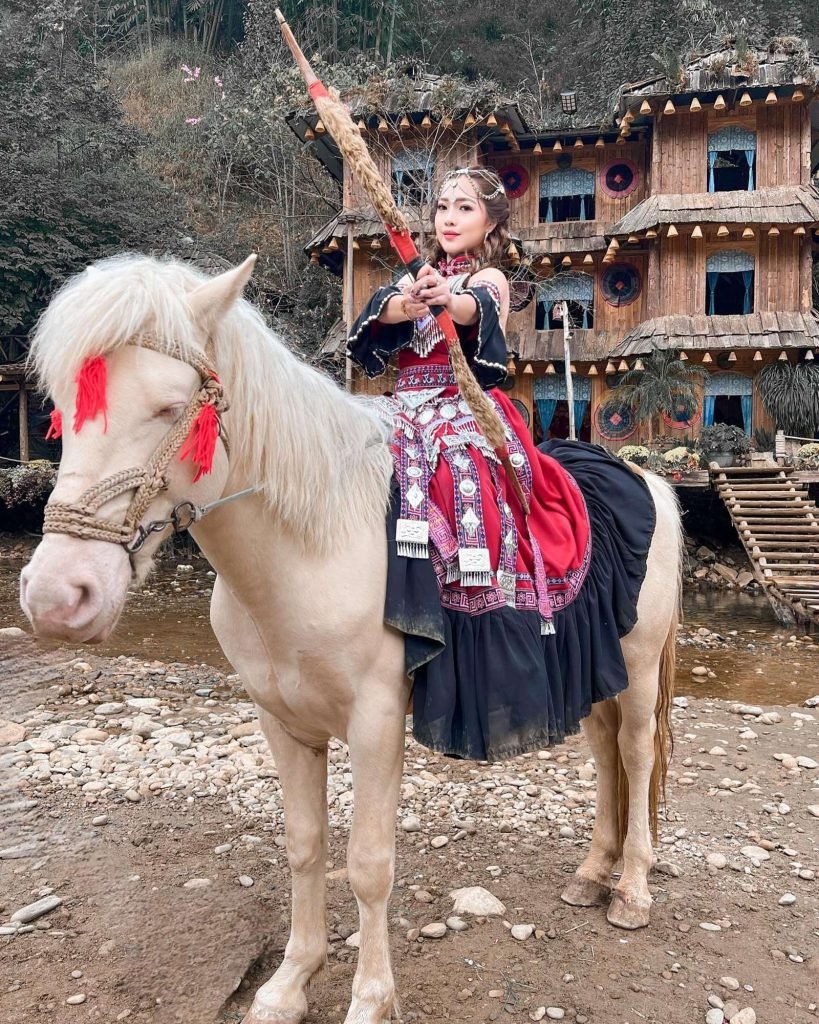
- Costume photosRent a Hmong or Dao outfit for photos among the houses and terraces.
- Close to townWalkable from Sapa — no long transfer needed.
Make the most of it
8 best things to do in Cat Cat Village
Walk the main loop
A circuit of roughly 2–3 km with many steps, down to the waterfall and back up the other side. Allow 1.5–2 hours at an easy pace.
Watch weaving and indigo dyeing
Several houses demonstrate spinning, weaving and dyeing. Buying a small item is a good way to say thank you.
See the waterfall and the hydro station
The main photo area at the bottom of the village, with bridges over the stream.
Rent a traditional costume
Usually about 100,000–150,000 VND for photos; shops are near the entrance and the waterfall.
Watch a cultural performance
Music and dance shows are held at set times at the stage near the waterfall. Free with your ticket.
Have a drink at a café
Several cafés overlook the stream and terraces — a good break before the climb back.
Take a motorbike taxi back up
If the climb out is too much, motorbike taxis wait at the exit; agree the price first.
Visit with a female rider
Our Instagram tour includes Cat Cat, Moana and Muong Hoa Valley in one half-day, with a guide who takes your photos.
Good to know
Prices: what does Cat Cat village cost?
| Adult ticket | About 150,000 VND |
|---|---|
| Child ticket (1–1.4 m) | About 70,000 VND |
| Children under 1 m | Free |
| Costume rental | About 100,000–150,000 VND |
| Motorbike taxi back to town | Usually about 30,000–50,000 VND; agree before you ride |
| Drinks at cafés | About 30,000–60,000 VND |
Prices are recent guides and can change. Bring cash in small notes.
Timing
Best time to visit Cat Cat Village
Quiet paths and soft light before tour groups arrive.
Busiest time, especially at weekends and on Vietnamese holidays.
Warm light on the terraces; fewer people near closing time.
March–May for blossoms and mild weather; September–November for golden fields and clear skies. The waterfall is strongest in the rainy season (June–August).
Plan your visit
Loop route: Cat Cat village
Entrance gate
Buy tickets and start down the stone steps.
Craft houses
Weaving and indigo dyeing along the path.
Terrace viewpoints
Look back up the valley towards Sapa.
Waterfall and hydro station
Bridges, water wheels and the performance stage.
Climb out
Walk up the far side or take a motorbike taxi back to town.
Map & directions
How to get to Cat Cat Village
- On foot from SapaAbout 20–30 minutes downhill from the square via Fansipan Street. The walk back up is steep.
- By taxi or motorbike taxiA few minutes from the town centre to the gate.
- With usOur Instagram and full-day motorbike tours drop you close to the entrance; the ticket is paid on site.
Eat like a local
Where to eat near Cat Cat Village
- Cafés by the waterfallCoffee, tea and snacks with a view of the stream.
- Grilled skewers and cornSold at stalls along the path.
- Com lamSticky rice in bamboo — an easy snack to carry.
- Thang coHmong stew, served at a few small eateries in and around the village.
For your camera
Best photo spots at Cat Cat Village
- Waterfall bridgeThe bridge with the cascades behind.
- Water wheelsWooden wheels turning in the stream.
- Terraces above the villageHouses and fields with Sapa in the distance.
- Costume shots among the housesAsk permission before photographing residents.
Local advice
Tips for visiting Cat Cat Village
Do
- Wear shoes with grip — steps are wet near the waterfall
- Arrive early to avoid crowds
- Bring small notes for tickets and crafts
- Ask before photographing residents
- Buy crafts directly from the makers
Don’t
- Underestimate the climb back to town
- Enter houses without being invited
- Give sweets or money to children
- Swim near the waterfall after heavy rain
- Expect a quiet, untouched village
Visit with a local
Tours that visit Cat Cat Village
Sapa · Female Riders
Sapa Instagram Tour by Motorbike: Cat Cat, Moana & Rice Terraces
From $63
$50
per adult
Good to know
Cat Cat Village: questions & answers
How much is the Cat Cat village ticket?
About 150,000 VND for adults and 70,000 VND for children 1–1.4 m tall; children under 1 m enter free. Prices can change, so check at the gate.
What are Cat Cat village opening hours?
Usually about 7:00 to 18:00 every day.
How far is Cat Cat village from Sapa?
About 2–3 km from the town square, a 20–30 minute walk downhill or a few minutes by taxi.
Are there many steps in Cat Cat village?
Yes. The loop has a lot of stone steps down to the waterfall and back up. Motorbike taxis can take you back to town.
Can I rent a costume in Cat Cat?
Yes. Hmong and other ethnic-style outfits are rented near the entrance and waterfall, usually for about 100,000–150,000 VND.
Is Cat Cat village worth visiting?
Yes if you are short on time: it is close to town and shows Hmong crafts and houses. It is touristy, so visit early or combine it with Lao Chai and Ta Van.
Which tours visit Cat Cat village?
Our Sapa Instagram tour with female riders and the full-day Sapa motorbike tour. The ticket is paid on site.
Is there a waterfall in Cat Cat village?
Yes. The stream drops in a series of cascades at the bottom of the village, next to a small French-era hydro station.
What is there to see in Cat Cat village?
Black Hmong wooden houses and craft workshops, demonstrations of indigo dyeing, beeswax batik and weaving, the Tien Sa waterfall at the bottom of the valley, an old French-era hydro station, and wooden and suspension bridges with water wheels. It is the most photogenic of the easy-to-reach villages.
Sapa