
Sapa
Sapa Weather by Month and Packing List: Gear, Seasons and Rice Terraces (2026)
Sapa weather month by month, the rice-terrace calendar, winter cold and rare snow, the best time to visit, and a full packing list for jeep and motorbike tours.
Quick answer
Sapa town sits at about 1,600 m, so it is cooler and far wetter than Hanoi. Winters (Dec–Feb) are cold, nights around 6–8°C with record lows below freezing; summers (May–Sep) are mild but rain on most days. The golden rice terraces peak in September. Pack layers, a rain jacket and grippy waterproof shoes whatever the month.
On this page
Sapa town sits at about 1,600 m, so it is much cooler and wetter than Hanoi. Winters (December–February) are cold, with nights around 6–8 °C on average and record lows below freezing. Summers are mild, but from May to September it rains on most days. Pack layers, proper rain gear and grippy, waterproof shoes whatever the month. The details are below.
Sapa weather by month
The figures below are long-term averages for Sapa town, as reproduced on Wikipedia from the Vietnam Institute for Building Science and Technology and an older yearbook (1930–1931). The source does not say which years the averages cover or which rows come from which dataset, so use them as a general guide, not a forecast.
| Month | Avg high °C | Avg low °C | Rain mm | Rainy days | Sunshine h |
|---|---|---|---|---|---|
| Jan | 12.3 | 6.2 | 70 | 16 | 113 |
| Feb | 14.3 | 7.8 | 74 | 16 | 116 |
| Mar | 18.2 | 10.8 | 105 | 16 | 151 |
| Apr | 21.3 | 14.0 | 213 | 18 | 168 |
| May | 22.4 | 16.3 | 341 | 22 | 148 |
| Jun | 22.9 | 17.6 | 381 | 24 | 99 |
| Jul | 23.0 | 17.7 | 461 | 26 | 104 |
| Aug | 23.0 | 17.4 | 452 | 23 | 114 |
| Sep | 21.7 | 15.9 | 303 | 20 | 102 |
| Oct | 19.0 | 13.7 | 201 | 19 | 94 |
| Nov | 16.1 | 10.2 | 106 | 14 | 113 |
| Dec | 13.2 | 7.0 | 66 | 14 | 121 |
In short, about 2,780 mm of rain falls in a year, most of it from May to September and the most in July and August. Vietnam’s official tourism site describes November–March as chilly and April–May as the time for clearer skies. Humidity stays high all year (80–90%), and Sapa is known for thick morning fog, which in September usually clears by mid-morning, according to one travel guide.
Rice terrace calendar
The terraces around Sapa grow one rice crop a year, so what you see depends on the month. Each stage lasts less than a month, and timing shifts with the year’s weather and the altitude of each field.
| Stage | When | What you see |
|---|---|---|
| Water and planting | Late April to mid-May | Flooded terraces reflecting the sky; farmers planting out seedlings |
| Young green rice | July–August | Bright green steps down the valleys |
| Golden rice before harvest | September | Yellow-gold terraces, then harvesting |
Sources disagree slightly on the golden season. Vietnam’s official tourism site gives mid-August to early September as the best time just before harvest, while Vietnamese press reports put the peak in September (a 2018 harvest festival ran 15–23 September). If golden rice is the main reason for your trip, aim for the first half of September and stay flexible.
Cold snaps, frost and snow
Sapa’s record lows drop below freezing between December and March, with the lowest recorded in January at −6.1 °C. Snow in the town itself is rare but has happened several times since 1971.
- 24 January 2016: snow covered Sapa town after a night of about −5 °C. Older residents called it the biggest snowfall in many years.
- Winter 2024–25: frost was reported on the summit of Fansipan (3,143 m) in November 2024 and again for nearly a week around early January 2025. This was on the mountain top, not in Sapa town.
- December 2025: light snow fell on Fansipan summit on 18 December, with ice two days later and the heaviest frost of the winter, at about 0 °C, on 25 December. Again, this was at the summit.
In winter, waves of cold air from the north reach northern Vietnam several times a month. If you visit between December and February, pack for nights near freezing, even if the forecast looks mild a week before.
Sapa packing list by season
All year
- Layers: a T-shirt, a long-sleeve top and a fleece or warm jumper
- A light waterproof jacket with a hood (it can rain in any month)
- Grippy, waterproof walking shoes or trail shoes; no flip-flops on trails
- Long trousers that dry quickly
- Small daypack with a waterproof cover or dry bag for your phone
- Reusable water bottle, snacks, basic first-aid and any medicines you need
- Sunscreen and sunglasses for clear days
December–February (cold)
- A warm, windproof jacket (down or insulated)
- Thermal base layer, hat, gloves and a scarf or buff
- Warm socks and something cosy for chilly evenings
March–April and October–November (in between)
- A fleece plus a windproof outer layer; mornings and evenings are cool
- A rain jacket for showers and misty days
May–September (wet season)
- Proper rain jacket or poncho, and waterproof covers for bags
- Quick-dry clothing and a spare pair of socks
- Waterproof trekking shoes with good grip, as trails get muddy
- Insect repellent
- A light fleece for cooler evenings
Local tip: forgot something? Warm jackets, rain gear and walking gear are easy to buy or rent cheaply in Sapa town, so you do not need to haul a full winter wardrobe from home.
What to wear on our Sapa jeep and motorbike tours
Mountain weather changes quickly, so on every Sapa tour we ask you to bring a warm layer and a light rain jacket. Tours run in light rain and mist, which is part of Sapa’s character, and rain ponchos are provided when it rains. If storms, landslides or road closures mean we have to cancel, you can move your tour to another date free of charge or choose a full refund.
Jeep tours
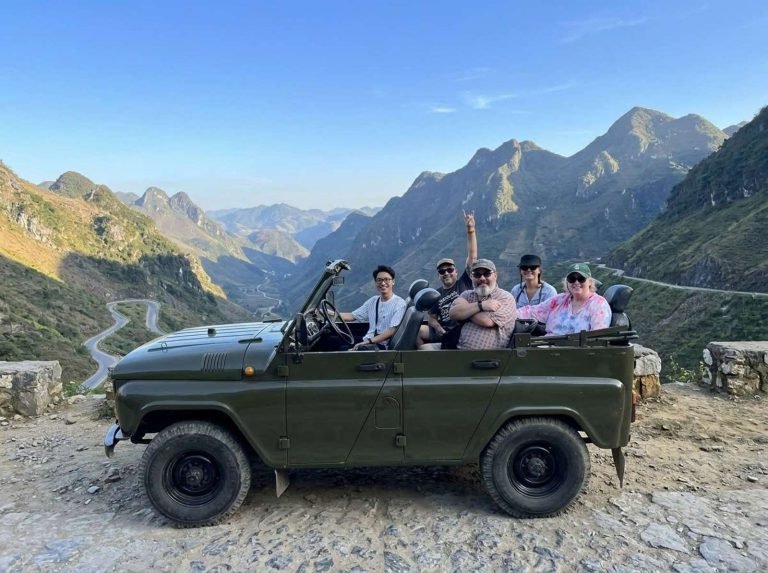
- You ride in an open-air army jeep, so expect wind. A windproof layer makes a real difference, especially in the morning.
- On the O Quy Ho Pass routes, the pass is colder and windier than Sapa town. Bring your warmest layer even if town feels mild.
- The village walk on the Muong Hoa Valley tour is short and easy. Comfortable shoes with grip are enough; paths can be slippery after rain.
Motorbike tours with female riders
- You ride as a passenger behind a professional local female rider, one guest per rider. No licence is needed, and helmets are provided and must be worn.
- Wear long trousers and closed shoes. On the O Quy Ho Pass motorbike tour and the full-day motorbike tour, add a warm, windproof layer. Wind chill on a bike is stronger than you expect.
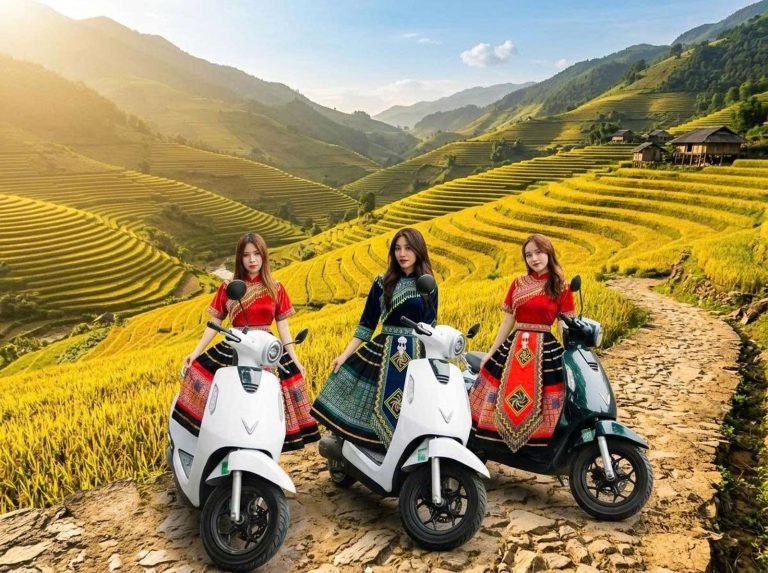
- Skirts, shorts and sandals are not practical on the bike. If you want a dress for photos, bring it in your daypack.
- On the Instagram tour, costume rental for photos is available at an extra cost and is not included in the price.
On our tours: our Sapa guides wear their own ethnic dress, so you will see traditional clothing from the moment you meet at Sapa Stone Church. Tell us about any back or neck problems before booking a motorbike tour. Travelling with children? Every child gets their own child seat in the jeep, or their own motorbike with a rider on motorbike tours; a child too small to sit alone rides on the parent’s lap, held by the parent.
Fansipan cable car: the basics
Fansipan is Vietnam’s highest peak at 3,143 m. The Sun World Fansipan Legend cable car is about 6.3 km long and climbs some 1,410 m in about 15 minutes. At opening it set two Guinness records, one for the longest three-rope cable car and one for the largest elevation difference.
- The summit is far colder than town. Bring your warmest layer, plus hat and gloves in winter.
- Visibility at the top can be poor; cloud may hide the view entirely.
- Ticket prices and opening hours change. Check the operator’s website on the day you plan to go.
The cable car is not part of our tours. If you plan to ride it, do it on a separate half-day from a jeep or motorbike tour. For how to reach Sapa in the first place, see our Hanoi to Sapa guide.
Tours this guide helps with
Sapa · Jeep
Sapa Full-Day Jeep Tour: Villages, O Quy Ho Pass & Glass Bridge
From $125
$100
per adult
Sapa · Female Riders
Sapa Motorbike Tour with Female Riders: O Quy Ho Pass & Glass Bridge
From $63
$50
per adult
Frequently asked questions
What is the best time to visit Sapa?
September to November is the classic window: September brings the golden rice terraces just before harvest, and autumn skies are clearer. March to May also has clearer weather and the flooded, mirror-like terraces in late April to mid-May. July and August are the wettest months, and December to February are cold but atmospheric.
When is the Sapa rice harvest and golden season?
The terraces grow one crop a year. Flooded, reflective terraces appear late April to mid-May; bright green rice in July and August; and the golden, pre-harvest terraces in September. Vietnam's official tourism site gives mid-August to early September as the peak, so aim for the first half of September and stay flexible.
How cold does Sapa get?
Winter nights average about 6–8°C and can drop below freezing – the record low is around −6°C in January. Waves of cold northern air arrive several times a month from December to February, so pack for near-freezing nights even if the forecast looks mild a week ahead.
Does it snow in Sapa?
Snow in Sapa town is rare but has happened – notably in January 2016, after a night around −5°C. Frost and occasional light snow are more common on the summit of Fansipan (3,143 m), which saw frost and ice in the winters of 2024–25 and December 2025. Town itself usually just gets cold, foggy days.
Is it rainy and foggy in Sapa?
Yes. It rains on most days from May to September, with July and August the wettest (around 450–460 mm each), and total annual rainfall is about 2,780 mm. Humidity stays high (80–90%) all year and thick morning fog is common, usually clearing by mid-morning. Bring proper rain gear in any month.
What should I pack for Sapa?
All year: layers (T-shirt, long-sleeve, fleece), a light waterproof jacket with a hood, grippy waterproof walking shoes, quick-dry trousers and a daypack with a dry bag. December to February: add a warm windproof jacket, thermal base layer, hat and gloves. May to September: add a poncho, waterproof bag covers and a spare pair of socks.
What should I wear on a Sapa jeep or motorbike tour?
Bring a warm, windproof layer and a light rain jacket on every Sapa tour. On open-air jeep tours and on the O Quy Ho Pass routes it is colder and windier than in town. On motorbike tours you ride as a passenger (helmet provided, must be worn); wear long trousers and closed shoes, and keep any dress for photos in your daypack.
Do I need trekking boots for Sapa?
You need grippy, waterproof shoes rather than full mountaineering boots for our tours, which involve only short, easy village walks. In the wet season (May–September) trails get muddy, so waterproof walking shoes with good grip matter more than anything – leave the flip-flops for the hotel.
Can I buy or rent warm and rain gear in Sapa?
Yes. Warm jackets, rain gear and walking gear are easy to buy or rent cheaply in Sapa town, so you do not need to carry a full winter wardrobe from home. It is a good backup if a cold snap arrives while you are there.
How high is Sapa, and what about Fansipan?
Sapa town sits at about 1,600 m, which is why it is so much cooler than Hanoi. Fansipan, Vietnam's highest peak at 3,143 m, is reached by the Sun World Fansipan Legend cable car (about 15 minutes). The summit is far colder than town and the view can be hidden by cloud. The cable car is not part of our tours.
Sources
We check facts against these sources. Rules and prices change, so confirm anything important with the official source before you travel.
Spotted something out of date? Tell us on WhatsApp