
Hanoi essentials
Money and Tipping in Vietnam: Dong, ATMs, Cards and Tipping (2026)
Using money in Vietnam: the dong, ATM fees and limits, cards vs cash, changing money legally, and how much to tip guides, drivers and in restaurants.
Quick answer
Pay in Vietnamese dong (VND). Carry a mix of 10,000–100,000 notes for street food, coffee and short rides, and keep a card for hotels and bigger bills. Withdraw from ATMs (choose dong, not your home currency), and change money only at banks or licensed counters – anywhere else is illegal. Tipping is not mandatory but is appreciated for guides, drivers and in spas.
On this page
Last checked: October 2026. Rules, fees and exchange rates change; check with your bank and official sources before you travel.
The Vietnamese dong in a nutshell
The currency is the Vietnamese dong (VND, ₫). Prices are quoted in dong and you should pay in dong. The State Bank of Vietnam issues 12 banknotes, and all of them remain legal tender:
| Polymer notes (the ones you will use) | Small cotton-paper notes |
|---|---|
| 500,000 / 200,000 / 100,000 / 50,000 / 20,000 / 10,000 | 5,000 / 2,000 / 1,000 / 500 / 200 / 100 |
Coins are legal tender too, but you will rarely see them; in practice you will use notes. As a rough guide to value, in January 2026 a 500,000 VND note was worth about US$19 and a 20,000 note about US$0.76. Check a live rate before you travel.
Local tip: a common traveller mistake is mixing up the 20,000 and 500,000 notes, which are both blue. Count the zeros (four on the 20,000, five on the 500,000), keep big and small notes in separate pockets, and count your change.
If you carry more than 15,000,000 VND or US$5,000 (or the equivalent) in cash, you must declare it when you enter or leave Vietnam.
ATMs: limits and fees
International cards work at a large network of ATMs (more than 20,000 nationwide, according to Vietnam’s national tourism site), including outside the arrival gates at major airports.
- Limits: typically 2–3 million VND per withdrawal at local banks and 5–10 million VND at some international-bank ATMs.
- Fees vary by bank. Many ATMs charge a fixed fee per withdrawal, and your home bank may add its own. Check the screen for any fee before you confirm.
- Choose dong, not your home currency, if the machine offers to convert for you. That “dynamic currency conversion” usually comes with a worse rate.
- Use ATMs inside banks or malls where you can, and cover the keypad.
- US advice notes that machines sometimes malfunction, so do not wait until you are down to your last note.
Cards, cash and QR codes
Visa and other major cards are widely accepted at hotels, tour operators, boutiques, larger restaurants, supermarkets and spas, and contactless payment is increasingly available. Some places add a card fee.
Cash is still the safe default for small spending. A street-food meal typically costs around 45,000 VND, and stalls, small cafés, markets and taxis are where you will want small notes. Many Vietnamese pay by scanning QR codes with local bank apps, and QR payment links now exist for visitors from China, South Korea, Thailand, Singapore, Laos and Cambodia. For most visitors from Europe, North America and Australia, cash is still the easiest option at small stalls.
- Carry a mix of 10,000–100,000 notes for food, coffee and short rides.
- Break 500,000 notes at hotels, supermarkets or larger restaurants.
- Keep a card as back-up for hotels and bigger bills.
Exchanging money legally
In Vietnam, buying or selling foreign currency is only legal at banks and licensed exchange points. The UK government warns that changing money anywhere else is illegal and risks losing your money.
This is enforced. A newer decree, Decree 340/2025/ND-CP, has applied since 9 February 2026 to buying or selling foreign currency at a place without an exchange licence. According to Vietnamese press summaries of the decree, small amounts can bring a warning and larger amounts fines that rise with the sum exchanged, reaching tens of millions of dong. We have not reproduced the exact thresholds here; the rule of thumb is simply not to exchange at unlicensed places at all.
- Exchange at a bank or a counter that clearly displays its licence.
- Some gold and jewellery shops are licensed and some are not. If a shop doesn’t display a licence, don’t use it.
- Airport counters are convenient for a small first amount; rates in town are often better.
Tipping in Vietnam
Tipping is not mandatory and is not a traditional part of Vietnamese culture. According to Vietnam’s national tourism site, it is becoming more common for tour guides and in spas and beauty salons, and is appreciated but not expected in restaurants.
| Situation | Common practice |
|---|---|
| Tour guide | Lonely Planet suggests about US$10–20 per day (the upper end for couples or families) |
| Driver | About half of the guide’s tip, per the same Lonely Planet guidance; you can give the total to the guide to share |
| Taxi | Rounding up the fare is appreciated |
| Hotel porter | US$1–2 per bag is fine; hotels usually include a service charge |
| Restaurants | Not expected; leave something if service was good |
Tip in dong where you can. If a service charge already appears on your bill, an extra tip is your choice.
Paying for an Eco Trip Asia tour
On our tours: you secure your booking with a small online deposit (15% of the total for bookings under US$100, 10% for bookings of US$100 or more) and pay the rest in cash on the tour day. Tips for your guide, riders or driver are optional and not included in the price. On public holidays such as Lunar New Year a surcharge applies, payable on site.
If you are unsure which currency or amount to bring for the balance, check your booking confirmation or message us on WhatsApp and we will confirm. Full details: booking, payment & date changes. Food and drinks listed in the itinerary of our food tours are already included, so you only need cash for extras.
Tours this guide helps with
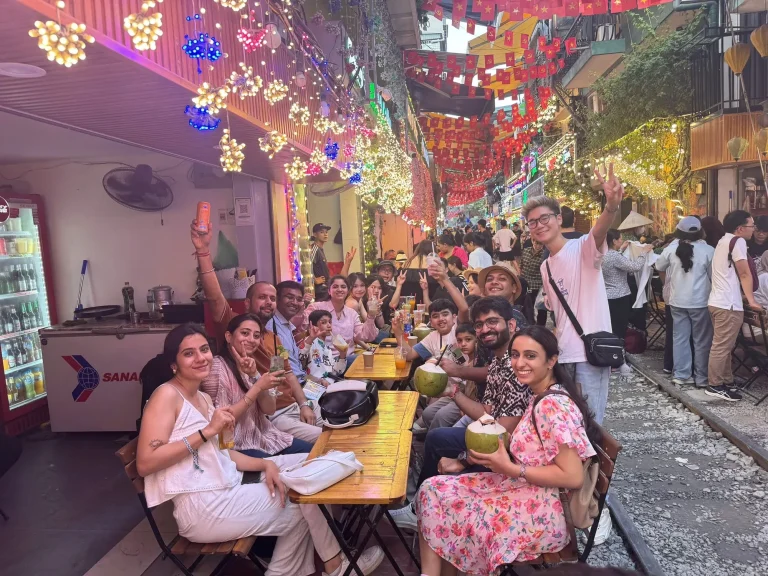
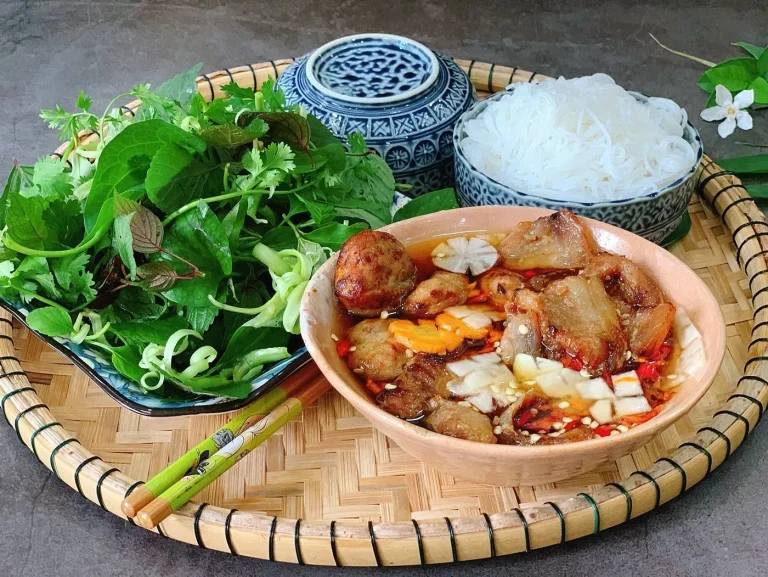
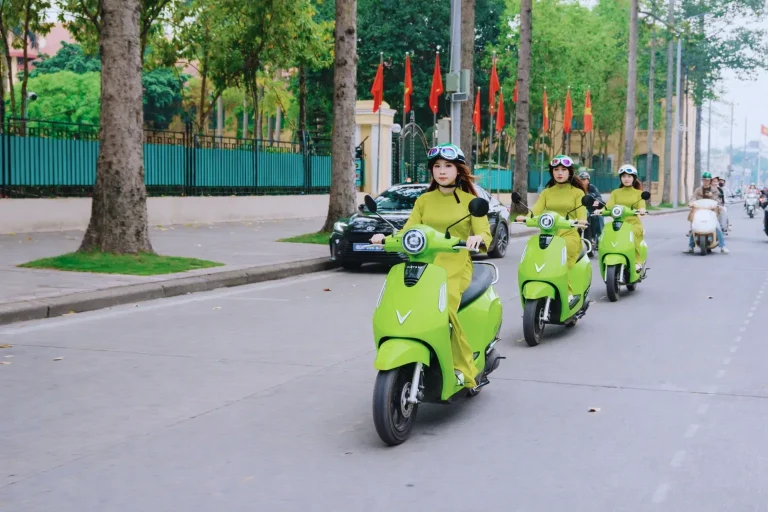
Hanoi · Electric Scooter
Hanoi Street Food Tour with Female Riders
786+ booked
From $72
$62
per adult
Frequently asked questions
What currency is used in Vietnam, and should I pay in dong?
The currency is the Vietnamese dong (VND). Prices are quoted in dong and you should pay in dong. There are polymer notes from 10,000 to 500,000 for everyday spending and smaller cotton-paper notes below that. Coins exist but are rarely seen, so in practice you use notes.
How much cash should I carry in Hanoi?
Carry a mix of 10,000–100,000 VND notes for street food, coffee and short rides – a street-food meal is typically around 45,000 VND. Break 500,000 notes at hotels, supermarkets or larger restaurants, and keep a card as backup for bigger bills.
Can I use my credit or debit card in Vietnam?
Yes, at hotels, tour operators, boutiques, larger restaurants, supermarkets and spas, and contactless is increasingly common, though some places add a card fee. Cash is still the safe default at street stalls, small cafes, markets and with taxis, so carry both.
What are the ATM limits and fees in Vietnam?
International cards work at a large ATM network (20,000+ nationwide), including at the airport. Withdrawals are typically 2–3 million VND at local-bank ATMs and 5–10 million at some international ones. Fees vary and your home bank may add its own, so check the on-screen fee, and always choose dong rather than your home currency to avoid a poor conversion rate.
Where can I change money legally in Vietnam?
Only at banks and licensed exchange points – changing money anywhere else is illegal and risks losing your cash. This is enforced: Decree 340/2025/ND-CP, in force since 9 February 2026, sets penalties for unlicensed foreign-currency exchange. Use a bank or a counter that clearly displays its licence; airport counters are fine for a small first amount.
How do I avoid mixing up the 20,000 and 500,000 dong notes?
Both notes are blue, which trips up many visitors. Count the zeros – four on the 20,000, five on the 500,000 – keep big and small notes in separate pockets, and count your change. It is the single most common money mistake in Vietnam.
Do I need to tip in Vietnam, and how much?
Tipping is not mandatory and not a traditional part of Vietnamese culture, but it is appreciated and increasingly common for tour guides, drivers and in spas. A rough guide is about US$10–20 a day for a guide (the upper end for couples or families) and about half that for a driver; rounding up a taxi fare is appreciated. It is not expected in restaurants.
Is there a limit on how much cash I can bring into Vietnam?
Yes. If you carry more than 15,000,000 VND or US$5,000 (or the equivalent) in cash, you must declare it when you enter or leave Vietnam.
Can I use QR-code or mobile payments as a tourist?
Many Vietnamese pay by scanning QR codes with local bank apps, and some cross-border QR links exist for visitors from China, South Korea, Thailand, Singapore, Laos and Cambodia. For most visitors from Europe, North America and Australia, cash is still the easiest option at small stalls, with a card for larger bills.
How do I pay for an Eco Trip Asia tour?
You secure your booking with a small online deposit – 15% of the total for bookings under US$100, 10% for US$100 or more – and pay the rest on the tour day in cash (dong or US dollars) or by bank transfer. Tips for your guide, rider or driver are optional and not included; a surcharge applies on public holidays, payable on site.
Should I change money at Noi Bai Airport?
Change only a small amount or withdraw a modest sum from an airport ATM for your first ride, as airport rates are usually a few per cent worse than in town. There are ATMs and licensed exchange counters outside the arrival gates; sort out the rest of your cash in the city.
Sources
We check facts against these sources. Rules and prices change, so confirm anything important with the official source before you travel.
Spotted something out of date? Tell us on WhatsApp