
Hanoi essentials
Hanoi Weather by Month: Seasons, Rain and the Best Time to Visit (2026)
Hanoi weather month by month with real climate averages, the four seasons explained, the nom damp spell, typhoon season, the best time to visit and what to pack.
Quick answer
Hanoi has four real seasons. Winter (Dec–Feb) is cool and grey, 20–22°C by day; spring (Mar–Apr) is damp and misty; summer (May–Sep) is hot and wet, 32–35°C with most of the year's rain; autumn (Oct–Nov) is the most comfortable time for being outdoors. The wettest month is August; the driest is December.
On this page
Hanoi weather month by month
These are long-term averages for central Hanoi: the Láng weather station in Đống Đa district, 1991–2020 climate normals from the Vietnam Institute for Building Science and Technology, as reproduced in Wikipedia’s Hanoi climate table. Any single year can be hotter, colder, wetter or drier than this.
| Month | Avg high | Avg low | Rain | Rainy days | Sunshine |
|---|---|---|---|---|---|
| January | 20.2 °C | 14.1 °C | 20 mm | 10 | 74 h |
| February | 21.7 °C | 16.4 °C | 20 mm | 12 | 45 h |
| March | 25.9 °C | 20.5 °C | 36 mm | 16 | 47 h |
| April | 28.5 °C | 22.4 °C | 104 mm | 14 | 90 h |
| May | 32.8 °C | 25.0 °C | 165 mm | 14 | 183 h |
| June | 34.9 °C | 26.6 °C | 264 mm | 15 | 171 h |
| July | 33.7 °C | 26.5 °C | 254 mm | 16 | 196 h |
| August | 33.2 °C | 25.8 °C | 274 mm | 17 | 159 h |
| September | 31.9 °C | 25.0 °C | 228 mm | 14 | 156 h |
| October | 30.4 °C | 22.8 °C | 155 mm | 11 | 143 h |
| November | 26.7 °C | 20.0 °C | 61 mm | 8 | 123 h |
| December | 21.3 °C | 13.8 °C | 20 mm | 5 | 124 h |
Rainfall is the monthly average total, rounded; rainy days are rounded averages; sunshine is average hours per month. Over a whole year Hanoi gets about 1,600 mm of rain on roughly 114 days, and the mean temperature is 23.6 °C. The same dataset records extremes of 42.8 °C (May) and 2.7 °C (January), so heatwaves and cold snaps do happen.
Hanoi’s four seasons in plain words
Winter: December to February
Cool and mostly dry. Daytime highs sit around 20–22 °C and nights drop to about 14–16 °C. Cold air from the north arrives in waves, several times a month, so a mild week can turn chilly overnight. December is the driest month by rainy days (about five). Later in winter the sky is often grey with light drizzle rather than real rain, and February is one of the least sunny months of the year.
Spring: March and April
Mild and humid. Highs climb from the mid-20s to the high 20s °C. March has the most rainy days of the cool months but very little total rain: it is mostly drizzle and mist, and sunshine is at its lowest. This is also the season of nồm (see below).
Summer: May to September
Hot, humid and wet. Average highs are 32–35 °C, June is usually the hottest month, and nights stay around 25–27 °C. These five months bring most of the year’s rain, with August the wettest on average. Summer is also the sunniest season, so plan for both strong sun and heavy rain.
Autumn: October and November
Temperatures and rainfall both fall. October is still warm (around 30 °C by day) with some rain; November is milder, with about 61 mm of rain on around eight days. For us, this is the most comfortable stretch of the year for being outdoors.
Rainy season and typhoons
Vietnam’s tropical cyclone season is generally considered to run from June to November, with the most activity from July to October. Storms tend to move from north to south through the season, so the north is usually affected earlier. On average around two tropical storms a year affect the northern delta and midlands, where Hanoi sits, and September has historically had the most landfalls in Vietnam.
What this means in practice: most summer days in Hanoi are hot with a shower or two, not storms. A travel publisher that covers north Vietnam describes the storms that matter as usually one or two a year, bringing a day or two of hard rain and wind. The worst effects are usually felt in the mountains: in September 2024, heavy rain from Typhoon Yagi triggered a deadly landslide near Sapa.
- Follow the local forecast in the days before your tour, especially from July to October.
- Keep a flexible day in your Hanoi plans if you travel in typhoon season.
- Have travel insurance that covers weather delays.
On our tours: tours run rain or shine, and all our tours include rain ponchos when it rains. If we cancel because the weather makes the tour unsafe, you can move to another date free of charge or take a full refund. If the tour goes ahead and you decide not to join, the deposit is not refundable but you can still change your date. Full details: rain, heat & weather policy.
Nồm: the damp spring air
Nồm is the word Hanoians use for the sticky, damp spells of late winter and spring. According to Vietnam’s national hydro-meteorological forecasting centre, it usually happens in late February, March and April, when the wind turns to the north-east or east and humidity in Hanoi can reach saturation. Walls and tiled floors sweat, laundry won’t dry and everything feels clammy.
Nồm is harmless for visitors but worth knowing about:
- Floors, steps and pavements can be slippery. Wear shoes with grip.
- Pack quick-dry clothes and a spare pair of socks.
- Keep phones and cameras in a zip bag if your room feels damp.
Which months suit which tours
There is no bad month for a Hanoi tour, but the season changes which tour and which departure time works best.
Jeep, scooter and e-bike city tours
On these tours you are outdoors most of the time, so you feel the weather. October to December is the most comfortable period: warm to cool days and fewer rainy days. From May to September, choose an early or late departure. Our 2-hour jeep and scooter tours leave at several times a day, including 08:00 and late afternoon, which avoids the strongest midday sun. In winter, bring a warm layer for the wind on a moving vehicle.
Food tours
Food tours work all year. Cool winter evenings are a great match for steaming bowls of noodle soup, and in summer the evening departure avoids the midday sun (though nights stay warm). Morning and evening food tours follow the same route, so you can pick the time that suits the weather without missing anything. See the Hanoi food tours.
Sunrise and sunset tours
Our sunrise & sunset scooter tour leaves at 05:00 or 17:00. In summer, the sunrise option is the coolest and quietest part of the day. In February and March, sunshine hours are at their lowest, so expect soft grey light more often than a colourful sky; the early-morning street life is still the highlight.
Countryside tours
Lotus flowers on our Co Loa countryside routes bloom mainly from May to August. Ba Vi National Park is in the hills and is cooler than the city, so bring a light jacket in any season.
What to pack by season
| Season | Pack |
|---|---|
| Dec–Feb | Light jumper or fleece, a windproof jacket for jeep and scooter rides, long trousers, closed shoes, a scarf for the evening |
| Mar–Apr | Layers, a light rain jacket, quick-dry clothes, shoes with grip for damp floors |
| May–Sep | Breathable clothes, sun hat, sunglasses, sunscreen, refillable water bottle, sandals or quick-dry shoes, a small umbrella |
| Oct–Nov | Light clothes by day, a thin layer for evenings, a compact rain jacket for October |
All year: insect repellent (dengue occurs in Hanoi throughout the year), and if you are sensitive to air pollution, a mask, as US travel advice notes that air quality in Hanoi can be poor. For temples and the Mausoleum you will need covered shoulders and knees whatever the weather. Our full list, by tour type, is in what to wear on a Hanoi tour.
Local tip: in summer, drink more water than you think you need and plan indoor time (a café, a museum) for the hottest hours, roughly midday to mid-afternoon.
Tours this guide helps with

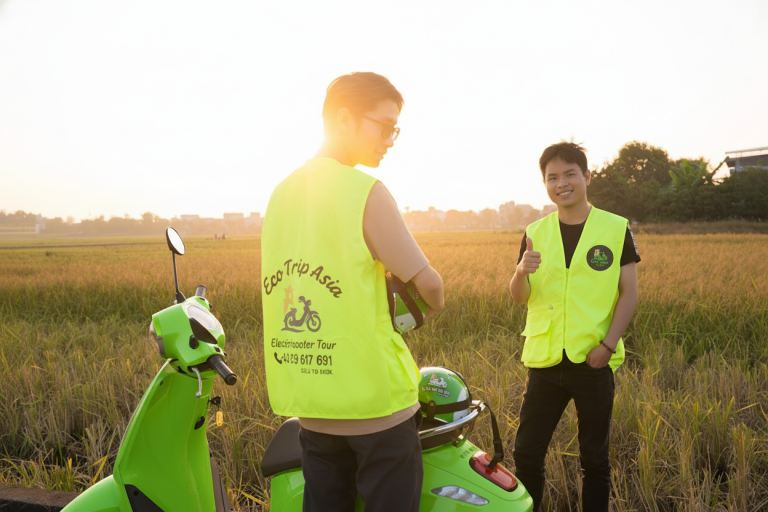
Hanoi · Electric Scooter
Hanoi Sunrise & Sunset Electric Scooter Tour
678+ booked
From $60
$51
per adult
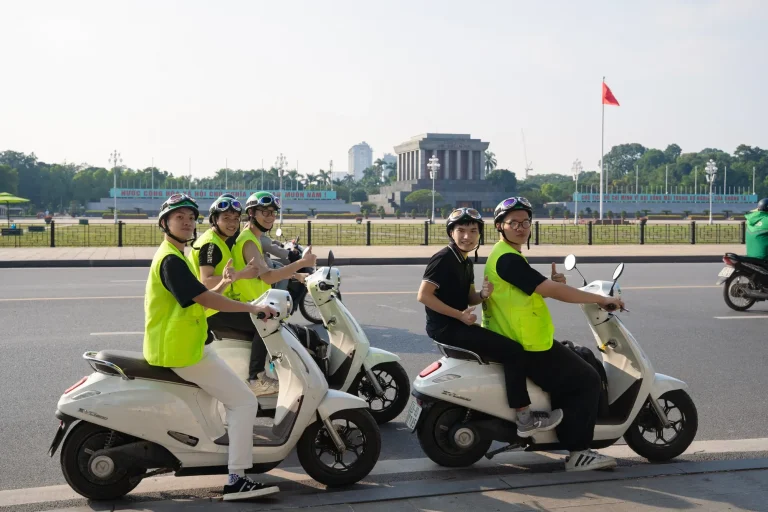
Hanoi · Electric Scooter
Hanoi Half-Day Electric Scooter City Tour
463+ booked
From $60
$51
per adult
Frequently asked questions
What is the best time to visit Hanoi?
October to December is the most comfortable stretch: warm to cool days, low humidity and few rainy days (November averages about 8 rainy days, December about 5). Spring is misty and damp, and summer is hot and wet, so autumn is the sweet spot for being outdoors on a tour.
When is the rainy season in Hanoi?
From May to September, when most of the year's roughly 1,600 mm of rain falls. August is the wettest month on average, at about 274 mm over 17 days. These are usually heavy showers rather than all-day rain, so tours still run.
How hot does Hanoi get in summer?
Average daytime highs are 32–35°C from May to September, with June usually the hottest, and nights stay around 25–27°C with humidity near 80%. The record high in the long-term dataset is 42.8°C, so heatwaves do happen – drink plenty of water and favour early or late tour departures.
Is Hanoi cold in winter?
It is cool rather than freezing. December to February highs sit around 20–22°C and nights fall to about 14–16°C, with waves of cold northern air several times a month and grey drizzle. The record low is 2.7°C. Bring a windproof layer – open jeeps and scooters feel colder than the thermometer suggests.
What is nom (nom am) weather in Hanoi?
Nom is the sticky, damp air of late winter and spring, usually late February through April, when humidity can reach saturation. Walls and tiled floors sweat, laundry will not dry and everything feels clammy. It is harmless for visitors, but floors can be slippery, so wear shoes with grip and pack quick-dry clothes.
When is typhoon season in Hanoi?
Vietnam's tropical cyclone season runs roughly June to November, with the most activity July to October. On average about two tropical storms a year affect the northern delta where Hanoi sits. Most summer days are simply hot with a shower; only a strong storm brings a day or two of hard rain and wind.
Does it rain all day in Hanoi?
Usually not. Even in the wet season the rain tends to come as heavy showers that pass, rather than lasting all day. Our tours run rain or shine, with ponchos provided when it rains, and guides may reorder stops to keep you comfortable.
What should I pack for Hanoi in each season?
Winter (Dec–Feb): a light jumper, a windproof jacket, long trousers and closed shoes. Spring (Mar–Apr): layers, a light rain jacket and shoes with grip for damp floors. Summer (May–Sep): breathable clothes, sun hat, sunscreen, a water bottle and a small umbrella. Autumn (Oct–Nov): light clothes with a thin evening layer.
Which month is best for a Hanoi jeep or scooter tour?
October to December is the most comfortable, with warm-to-cool days and fewer rainy days. From May to September, choose an early-morning or late-afternoon departure to avoid the midday heat; in winter, bring a warm layer for the wind on a moving vehicle.
Is October a good time to visit Hanoi?
Yes – October is one of the best months. It is still warm (around 30°C by day) with rainfall easing after the summer, and it begins Hanoi's comfortable autumn. Early November is milder and drier still.
Do I need insect repellent in Hanoi?
Yes, year-round. Dengue occurs in Hanoi throughout the year, so use repellent on tour days, especially on countryside, e-bike and evening tours, and see a doctor promptly if a fever lasts more than two days.
Sources
We check facts against these sources. Rules and prices change, so confirm anything important with the official source before you travel.
Spotted something out of date? Tell us on WhatsApp