
Food & drink
What Is Pho? Hanoi Phở, Its Origins and How to Eat It
Phở is Vietnam's rice-noodle soup, born in the north in the early 20th century. Here is what is in the bowl, how Hanoi phở differs from the southern style and how to eat it.
Definition
Phở is a Vietnamese soup of flat rice noodles (bánh phở) in a clear, spiced broth, topped with beef (phở bò) or chicken (phở gà) and fresh herbs. The dish took shape in northern Vietnam in the early 20th century, around Nam Định and Hanoi, and Hanoi-style phở is now on Vietnam's national list of intangible cultural heritage.
Also called: pho, phở bò, phở gà, Hanoi pho
At a glance
| Vietnamese name | phở (phở bò = beef, phở gà = chicken) |
|---|---|
| Pronunciation | roughly “fuh”, with a questioning tone |
| Where it began | Northern Vietnam (Nam Định and Hanoi), early 20th century |
| Main parts | Flat rice noodles, clear spiced broth, beef or chicken, herbs |
| Heritage | Hanoi phở: national intangible cultural heritage (2024) |
| Our tours with phở | Self-ride e-bike city tour, from $45 |
| Related dishes | Phở cuốn (rolls), phở chiên phồng (puffed fried phở) |
On this page
What phở is
Phở is a noodle soup made of three parts: flat white rice noodles called bánh phở, a long-simmered broth, and thin slices of meat with fresh herbs on top. Beef phở (phở bò) is the most common; chicken phở (phở gà) is made the same way with a broth of chicken bones and meat.
A beef broth is built from beef bones simmered for hours with charred onion, charred ginger and spices such as star anise, cinnamon, cloves and black cardamom. The cook places raw or cooked beef on the noodles and pours the boiling broth over them, so thin raw slices cook in the bowl.
Where phở comes from
The modern dish appeared in northern Vietnam in the first decade of the 20th century. Nam Định province, south-east of Hanoi, is often called its traditional home, and according to Hanoi’s city government phở was being sold by street vendors around Hanoi between 1907 and 1910. Vendors first sold it at dawn and dusk, carrying a whole kitchen on a shoulder pole.
The exact origin is disputed. Some historians link the dish to the French colonial period, when more beef was eaten; others point to a Chinese beef noodle soup or to older Vietnamese noodle dishes. The popular idea that the name comes from the French stew pot-au-feu is one theory, not an established fact.
In August 2024 Vietnam’s Ministry of Culture, Sports and Tourism added Hanoi phở to the national list of intangible cultural heritage, in the category of folk knowledge.
Hanoi phở vs southern phở
After the country was divided in 1954, more than a million people moved from the north to the south, and phở became popular there too. The two styles have drifted apart since.
| Hanoi (northern) phở | Southern phở | |
|---|---|---|
| Broth | Clear and savoury | Sweeter and cloudier |
| Garnish | Spring onion and coriander | A plate of fresh herbs and bean sprouts |
| On the table | Chilli sauce, pickled garlic, fried dough sticks (quẩy) | Lime, sliced chilli, hoisin and chilli sauces |
Many travellers know phở from the southern version served abroad, so the plainer Hanoi bowl can be a surprise: the broth is meant to be the star.
How to eat a bowl of phở
- Taste the broth first, before adding anything.
- Season a little at a time with chilli, pickled garlic or a squeeze of lime if the shop offers it.
- Use chopsticks and a spoon together: chopsticks lift the noodles and meat, the spoon catches the broth.
- Dip the quẩy (fried dough) into the broth in Hanoi shops that serve it.
- Order by the cut of beef: shops usually let you choose rare beef, well-done beef or a mix.
Phở beyond the soup: phở cuốn and phở chiên phồng
The same rice-noodle sheet is used in other Hanoi dishes. Phở cuốn wraps uncut sheets around stir-fried beef and herbs, eaten with a sweet-and-sour dipping sauce; it was created on Ngu Xa island beside Truc Bach Lake. Phở chiên phồng is the noodle sheet fried until it puffs up like small pillows, and served with beef.
Where travellers find phở in Hanoi
Phở is sold all over the city, from pavement stalls to family shops. In the Old Quarter early morning is a busy time at phở stalls, and it is easy to combine a bowl with a walk around Hoan Kiem Lake. A shop that is full of local diners turns its pots over quickly, which is a good sign for freshness.
If you have food allergies or a special diet, phở broth and sauces are hard to check on your own; our guide to food and dietary needs on Hanoi tours explains what to tell a guide.
Trying phở with Eco Trip Asia
Two Eco Trip Asia tours list phở as part of the meal. The self-ride e-bike city and Banana Island tour finishes with Hanoi phở at a local restaurant (from $45). On the Hanoi city motorbike tour with female riders, the local meal is phở gà or bún chả at a family restaurant, followed by coffee beside the railway.
The jeep street food tour serves the phở-sheet dishes rather than the soup: phở cuốn and crispy phở chiên phồng with beef at an island meal on West Lake. For a wider look at the city’s food tours, see what a street food tour is.
Places to see it
 Hanoi Old QuarterHanoi’s centuries-old merchant district: guild streets, tube houses, temples, markets and the best street food in Vietnam.
 Truc Bach Lake & John McCain MemorialA small, peaceful lake beside West Lake, home to the John McCain memorial and the street where pho…
 West LakeHanoi’s largest lake: a 17 km shoreline of pagodas, temples, lotus ponds, lakeside cafés and the city’s best…
Related tours

Hanoi · E-Bike
Hanoi Bike Tour: Self-Ride E-Bike City & Banana Island Tour
4.9 (244 reviews)576+ booked
From $45
$40.50
per adult
Hanoi · Female Riders
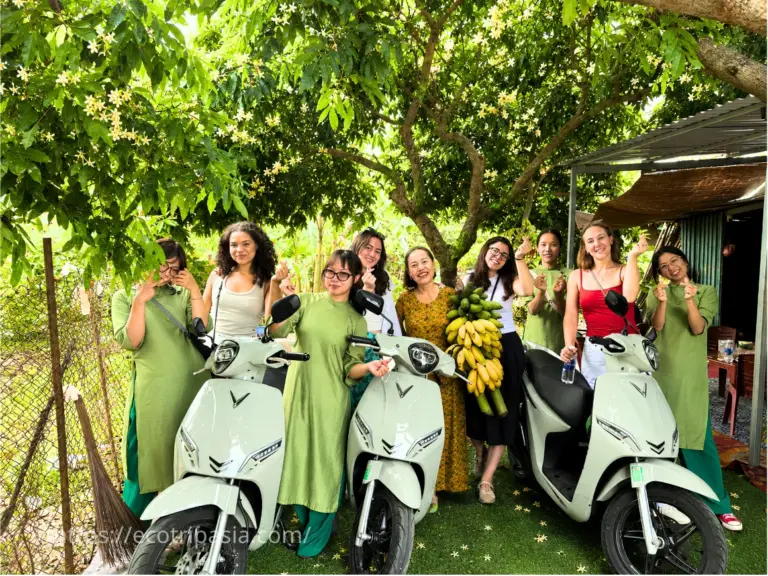
Hanoi City Motorbike Tour with Female Riders
4.9 (345 reviews)876+ booked
From $53
$50.35
per adult
Hanoi · Jeep
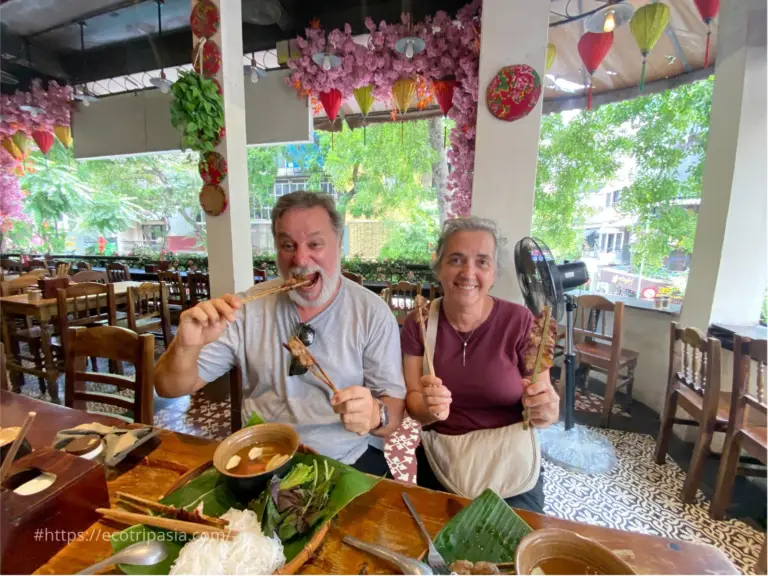
Hanoi Jeep Street Food & Culture Tour
4.9 (271 reviews)653+ booked
From $59
$56.05
per adult
Frequently asked questions
What is pho made of?
Phở is made of flat rice noodles (bánh phở), a clear broth simmered from beef or chicken bones with charred onion, ginger and spices such as star anise and cinnamon, slices of beef or chicken, and fresh herbs.
How do you pronounce phở?
Phở is pronounced roughly like “fuh”, with a rising, questioning tone. It does not rhyme with “go”.
Where did pho originate?
Phở took shape in northern Vietnam in the early 20th century, around Nam Định province and Hanoi, where street vendors were selling it by about 1907–1910. Its exact roots, French or Chinese influence, are still debated.
What is the difference between Hanoi pho and southern pho?
Hanoi phở has a clear, savoury broth with spring onion and coriander, plus chilli sauce, pickled garlic and fried dough on the side. Southern phở has a sweeter, cloudier broth and comes with a plate of herbs, bean sprouts, lime and hoisin sauce.
Is pho eaten for breakfast in Hanoi?
Phở was first sold by street vendors at dawn and dusk, and early morning is still a busy time at Hanoi phở stalls, but many shops serve it later in the day as well.
Which Eco Trip Asia tours include pho?
The self-ride e-bike city tour ends with Hanoi phở at a local restaurant, and the half-day city motorbike tour with female riders includes phở gà or bún chả. The jeep street food tour serves phở cuốn and phở chiên phồng, made from the same rice-noodle sheets.
Sources
We check facts against these sources. Rules and prices change, so confirm anything important with the official source before you travel.
Spotted something out of date? Tell us on WhatsApp