
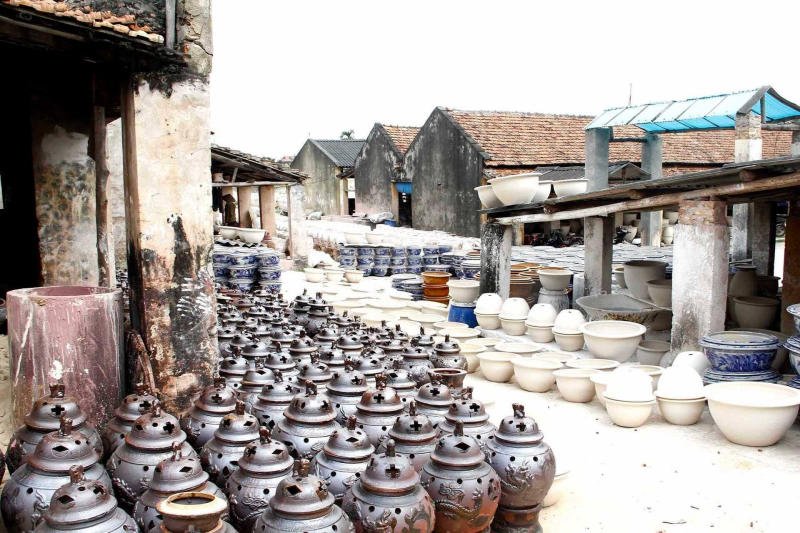
Ready to shape clay alongside master craftsmen? Discover the ceramic heritage of Gia Lam district, visit active local kilns, and join hands-on workshops. Jump straight to our pottery tour comparison table or choose your travel style.
The Millennium of Clay: Bat Trang’s Legacy
Bat Trang is Vietnam’s most famous ceramic craft village, with a history dating back to the Ly Dynasty in the 11th century. Situated along the banks of the Red River, the village was built on rich white clay deposits, making it a natural center for ceramic production. For centuries, Bat Trang pottery was exported along maritime trade routes across Asia and Europe.
Unlike industrial factories, Bat Trang remains a village of family-run workshops. Behind old brick gates, families continue to throw clay on foot-powered wheels, paint intricate blue-and-white motifs by hand, and fire ceramics in local kilns. Exploring these narrow lanes requires a unique travel style to discover the hidden studios where the true masters work.
Gia Lam District, located southeast of the city center, has been the primary ceramic trade gateway for Hanoi. The village’s river location let artisans transport heavy raw clay from nearby provinces and easily ship finished porcelain plates, bowls, and vases to national and global markets.
The Hands-On Wheel-Throwing Experience
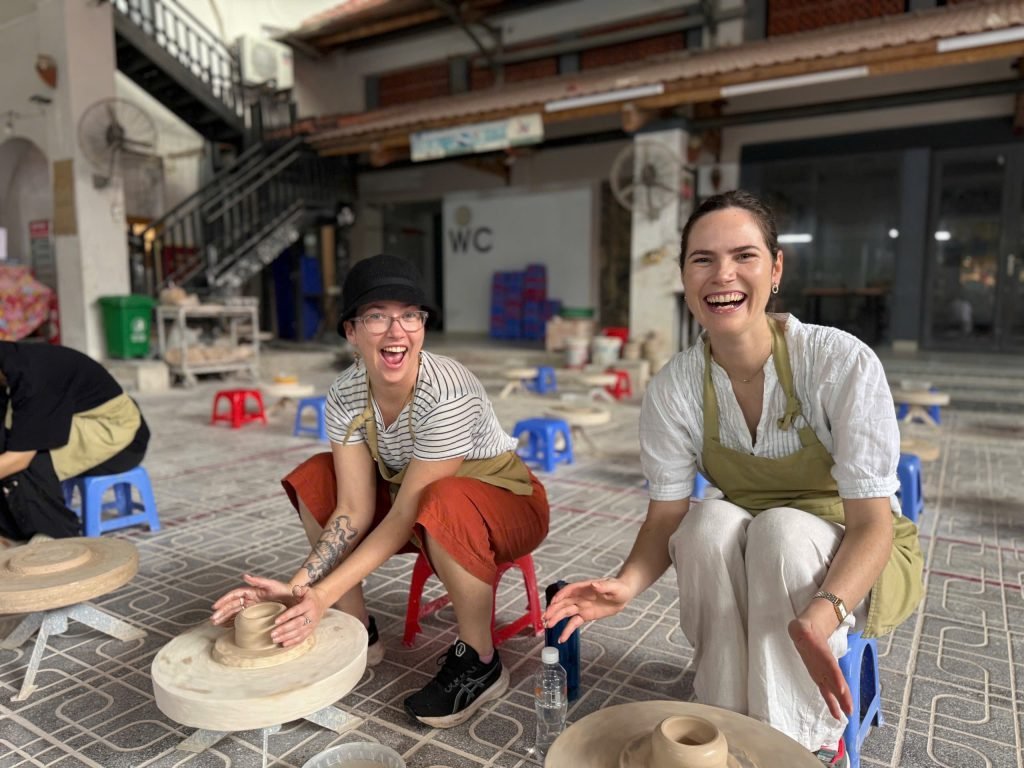
The highlight of visiting Bat Trang is joining a local pottery workshop. You sit at a traditional foot-powered wheel, working with a block of wet clay under the guidance of a master artisan.
- Centering the Clay: The critical first step. You learn to apply centered pressure with wet hands to stabilize the clay block on the spinning wheel.
- Shaping: Slowly opening the center and pulling the clay walls upward to shape your own cup, vase, or bowl.
- Decorating & Glazing: Once shaped, you use bamboo tools to trim the edges, write your name, and paint colorful slips or glaze patterns before the item is fired.
Exploring Pottery Trails by Vintage Jeep
Riding in an open-top Soviet military Jeep (UAZ) offers a memorable way to reach Bat Trang. You will cruise past Red River dikes, local farms, and local markets, enjoying scenic 360-degree views.
Our Jeep itineraries make stops at ancient communal houses, family kilns, and the pottery market. The open-air ride along the Red River delta paths provides a fresh perspective of the rural countryside surrounding the craft village.
Hanoi Bat Trang Pottery Jeep Tour
When buying souvenirs in the Bat Trang Pottery Market, look for the official maker stamps on the base of the ceramics. Authentic hand-painted items will have slight variations in line thickness and color shades, showing the artisan’s personal touch compared to stenciled mass prints.
Bat Trang Pottery by Motorbike with Female Riders
For a closer look at the village, our motorbike tour with female riders is ideal. Motorbikes easily navigate the narrow, stone-paved lanes of the ancient village, crossing old canals and riding directly to local workshops.
Riding pillion behind our female riders, you will ride past drying clay racks, meet local potters, and visit the modern Bat Trang Ceramic Museum.

Hanoi Bat Trang Pottery Motorbike Tour with Female Riders
Motorbike rides with our female riders let you navigate the narrow lanes of Bat Trang and access local family workshops easily.
Our Female Riders: Cultural Craft Companions
Our motorbike tours with female riders offer a highly personalized craft experience. Guided by safe, bilingual female riders wearing traditional Vietnamese Ao Dai, you will enjoy unique cultural insights.
Our female riders will guide you to historic community temples, help translate conversations with local potters, and assist you in packaging your delicate fired souvenirs securely. Their local knowledge makes your craft village visit deeply engaging.
Bat Trang is famous for its unique glazes, particularly the crackle glaze (men rạn) and the copper red glaze. These techniques require precise control of kiln temperatures and carbon dioxide levels during firing, a secret passed down through generations.
Hanoi to Bat Trang Pottery Tours Comparison
Choose the perfect artisan adventure matching your preferred travel style and interests.
| Tour Category | Vehicle Style | Itinerary Sights | Best Suited For | Average Price |
|---|---|---|---|---|
| Jeep Pottery Tour | Classic Vintage UAZ | Ancient house, pottery market, Red River dike | Families, groups, photography lovers | From $59 USD |
| Motorbike Pottery Tour with Female Riders | Motorbike with Female Rider | Ceramic Museum, narrow alleyways, clay workshop | Active couples | From $60 USD |
Frequently Asked Questions (FAQ)
Can we take the pottery we make home with us?
Yes. After shaping your clay on the wheel, the local artisans will dry, paint, and fire your creation in the kiln. Firing takes about 1-2 hours, allowing you to collect your finished piece before leaving the village.
Does the clay stain clothes?
The natural clay used in Bat Trang washes out easily with water. However, we provide protective aprons for all guests during the workshop session.
How far is Bat Trang Pottery Village from Hanoi Old Quarter?
Bat Trang is located in Gia Lam District, approximately 13 kilometers southeast of Hanoi city center, taking about 30-40 minutes of travel time.
Are the kilns safe to visit?
Yes. We visit modern gas-fired kilns and historic brick kilns that are inactive during guest visits, ensuring a completely safe, educational viewing experience.
Do we need prior experience to do the pottery workshop?
No. Local master artisans will guide you step-by-step, helping you control the wheel speed and hand positioning to successfully shape your cup, vase, or bowl.
What should we wear for the workshop?
Comfortable clothes and flat, close-toed shoes are highly recommended since you will sit at a foot-powered pottery wheel.
Is shipping available for larger ceramic items?
Yes, major retail shops in the Bat Trang Pottery Market coordinate secure international shipping services with robust wooden-crates wrapping.
Are there food options in Bat Trang Village?
Yes, we stop at local village cafes and family eateries serving traditional Red River Delta snacks, spring rolls, and fresh juices.