Bat Trang Pottery Village
Hanoi’s famous ceramic village on the Red River, where families have fired pottery for more than five centuries and you can try the wheel.
- Hanoi
- Included in 2 tours
- Tours from $59
- Updated October 2026


About Bat Trang Pottery Village
Bat Trang pottery village is the best-known ceramic village in northern Vietnam and an easy half-day trip from Hanoi. It sits on the east bank of the Red River, about 13–15 km from the Old Quarter, and has made pottery for more than 500 years. Records from the 15th century already mention Bat Trang making bowls and cups, and local tradition says the first potters came from Bo Bat, a ceramic village in today’s Ninh Binh, drawn by the good white clay of the river bank.
From the 15th to the 17th century Bat Trang ware travelled far beyond Vietnam on trading ships. Today the village is a mix of old and new: moss-covered brick lanes, communal houses and family workshops sit beside shops selling everything from rice bowls to giant garden vases.
The Bat Trang ceramic village experience
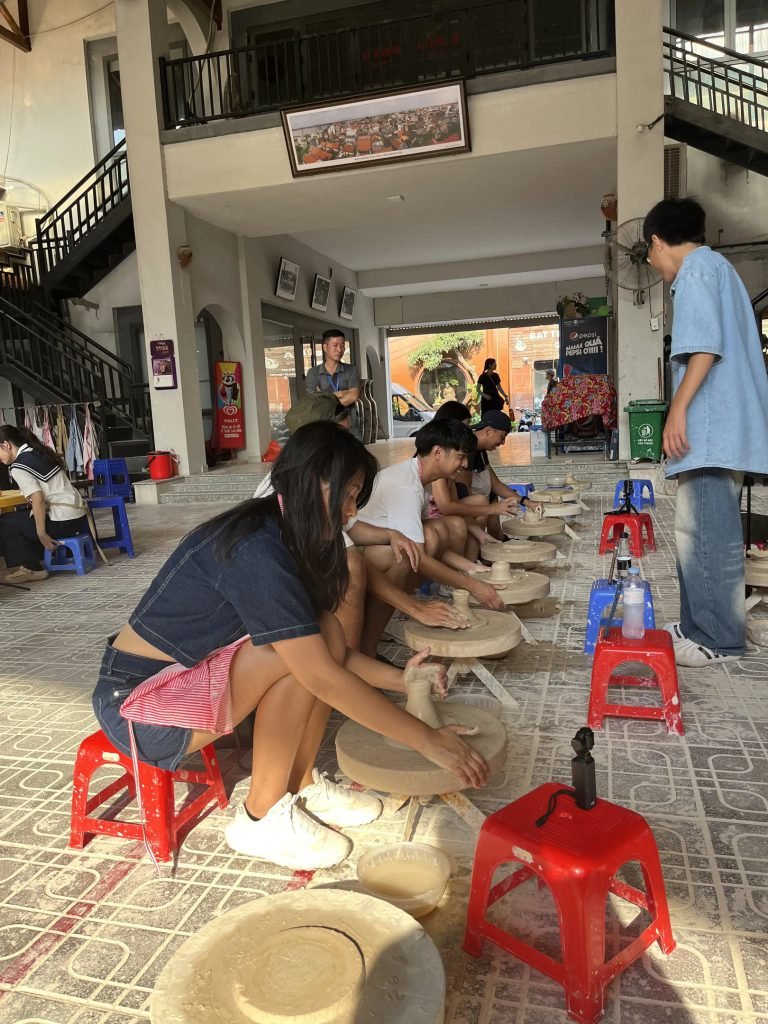
Most visitors start at the Bat Trang ceramic market, a large covered market of small stalls selling glazed tableware, tea sets, vases and souvenirs at village prices. Inside and around the market, workshops let you sit at a potter’s wheel and shape your own piece, then paint it. Deeper in the village you can see one of the last old lo bau (wood-fired chamber kilns), walls pressed with round coal cakes once used to fire the kilns, and families shaping and glazing by hand.
The striking Bat Trang Pottery Museum, with spiral roofs inspired by potter’s wheels and kilns, explains the village’s history and techniques and has its own pottery studio.
Visiting with us
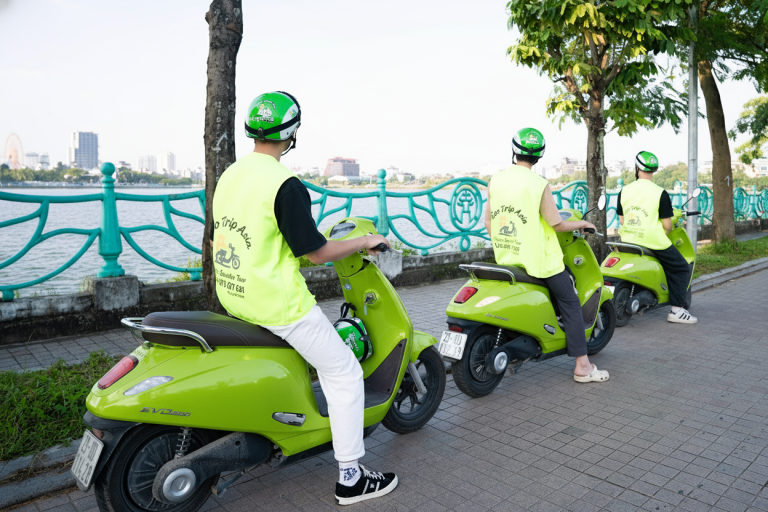
Our half-day pottery tours go by vintage army jeep or as a passenger on an electric scooter. You share tea and mung bean cakes with a family, browse the market, see the Lo Bau kiln, make your own piece in a workshop and finish with a lunch of freshly made Banh Cuon.
Is Bat Trang worth a half-day trip?
Yes – it is the easiest and most hands-on village trip from Hanoi, only 13 to 15 km from the Old Quarter. You can browse the big ceramic market, throw and paint your own piece at a workshop, see one of the last old wood-fired lo bau kilns, and visit the striking Pottery Museum, all in about half a day. It suits families and anyone who likes making something to take home.
Worth it?
Why visit Bat Trang Pottery Village?
- Five centuries of potteryOne of Vietnam’s oldest ceramic villages, still run by potter families.
- The ceramic marketHundreds of stalls with tableware, tea sets and gifts at village prices.
- Hands-on workshopsSit at the wheel and make your own bowl or cup, then paint it.
- The old Lo Bau kilnOne of the last traditional wood-fired chamber kilns left in the village.
- Old lanes and communal houseBrick alleys, old houses and a communal house away from the shops.
- Bat Trang Pottery MuseumSpiral, kiln-inspired architecture with displays on village history.
Make the most of it
8 best things to do in Bat Trang Pottery Village
Browse the Bat Trang ceramic market
Stalls sell bowls, plates, tea sets, vases and small souvenirs. Prices are lower than in the Old Quarter; check glazes and bases for cracks, and bargain politely.
Try the potter’s wheel
Many workshops in and around the market offer a short wheel session from about 10,000–40,000 VND, plus painting. Allow 30–60 minutes. Fired and glazed pieces need time before you can take them home.
See the Lo Bau kiln
The old wood-fired chamber kiln in the old part of the village is close to a century old. Its stepped brick chambers show how pottery was fired before gas kilns.
Walk the old lanes
Narrow brick alleys with walls patched with old kiln parts and coal cakes. Look for small family workshops where clay is shaped and glazed by hand.
Visit the Bat Trang Pottery Museum
About 60,000 VND for the main floors and about 150,000 VND for full access; a package with a pottery experience costs around 130,000 VND. Open about 8:00–17:30 on weekdays and to 18:00 at weekends.
Stop at the communal house
Bat Trang’s communal house (dinh) honours the village’s founders and guardian spirits. Dress modestly.
Shop direct from workshops
Larger factories along the main road sell export-quality pieces and can arrange shipping. Ask for careful packing if you are flying.
Join our pottery tour
By jeep or electric scooter in 4–4.5 hours, with tea in a family house, the market, the Lo Bau kiln, a pottery workshop and a Banh Cuon lunch.
Good to know
Prices: what things cost in Bat Trang
| Village entry | Free |
|---|---|
| Pottery wheel session | About 10,000–40,000 VND, plus painting or firing if you want |
| Small bowl or cup | From about 10,000–50,000 VND |
| Tea set | From a few hundred thousand VND, depending on quality |
| Museum, main floors | About 60,000 VND for adults |
| Museum, all floors | About 150,000 VND for adults |
| Museum pottery package | About 130,000 VND for adults |
| City bus 47A | A few thousand VND from Long Bien |
Prices are a guide only and change with season and quality. Market vendors usually want cash; larger shops may take cards.
Timing
Best time to visit Bat Trang Pottery Village
Workshops are busy and the lanes are calm — the best time to see potters at work.
Popular with Hanoi families and school groups; workshops and the museum can be crowded.
Busy with buyers and colourful displays, but some workshops close for the holiday itself.
October to April is cooler and drier. Summer is hot, and kilns make some workshops warm.
Plan your visit
Visit route: half a day in Bat Trang
Traditional village house
Start with tea and cakes in an old family home.
Bat Trang ceramic market
Browse the stalls before the crowds.
Lo Bau kiln
See the old wood-fired chamber kiln.
Pottery workshop
Make your own piece on the wheel.
Old lanes and communal house
Walk the brick alleys and watch artisans at work.
Bat Trang Pottery Museum
Optional, if you have time and want more history.
Map & directions
How to get to Bat Trang Pottery Village
- By Grab or taxiAbout 13–15 km, 30–45 minutes from the Old Quarter via Chuong Duong or Vinh Tuy Bridge. Usually about 150,000–250,000 VND each way.
- By busCity bus 47A from the Long Bien bus interchange runs to Bat Trang in about 45–60 minutes. Very cheap.
- By boatSome operators run river trips from Hanoi; schedules vary, so book ahead.
- With usOur jeep and electric scooter pottery tours include Old Quarter pickup, a guide, the workshop and lunch.
Eat like a local
Where to eat near Bat Trang Pottery Village
- Canh mang mucDried squid and bamboo shoot soup, a traditional Bat Trang festive dish.
- Banh CuonSteamed rice rolls with pork and mushroom — the lunch on our pottery tours.
- Mung bean cakes and teaOften served to guests in village homes.
- Market food stallsSimple noodle soups and rice dishes around the ceramic market.
For your camera
Best photo spots at Bat Trang Pottery Village
- Walls of coal cakesOld walls pressed with round coal cakes from kiln-firing days.
- Stacks of ceramics at the marketRows of blue-and-white bowls and colourful glazes.
- Lo Bau kilnBrick chambers and soot-darkened walls.
- Museum exteriorThe spiral, wheel-like roofs, best in late afternoon light.
Local advice
Tips for visiting Bat Trang Pottery Village
Do
- Check pieces for cracks before you pay
- Ask shops to bubble-wrap anything you will fly with
- Wear clothes you do not mind getting clay on
- Carry cash for small stalls
- Ask before photographing artisans at work
Don’t
- Touch drying pieces on racks
- Expect every piece you make to be ready the same day
- Buy large items without asking about shipping
- Assume every “antique” is old
- Rush — the old lanes are the best part
Visit with a local
Tours that visit Bat Trang Pottery Village


Hanoi · Electric Scooter
Hanoi Electric Scooter Tour to Bat Trang Pottery Village
578+ booked
From $70
$60
per adult
Good to know
Bat Trang Pottery Village: questions & answers
Where is Bat Trang pottery village?
On the east bank of the Red River, about 13–15 km south-east of the Old Quarter, around 30–45 minutes by car.
Is there an entrance fee for Bat Trang pottery village?
No, the village and market are free. You pay for workshops, purchases and the museum (from about 60,000 VND).
How much is a pottery class in Bat Trang?
A simple wheel session usually costs about 10,000–40,000 VND, more with painting or firing. Our tours include the workshop.
Can I take my pottery home the same day?
Simple pieces can sometimes be taken the same day; fired and glazed pieces need more time. Your guide or the workshop will explain the options.
How do I get to Bat Trang from Hanoi?
By Grab or taxi in 30–45 minutes, by city bus 47A from Long Bien, or on a guided jeep or electric scooter tour with hotel pickup.
What are the Bat Trang ceramic market opening hours?
Roughly 7:30–17:30 daily, though individual stalls open and close at different times.
Is a Bat Trang ceramic village tour worth it?
Yes, especially if you want to make something with your hands and see a living craft village. Mornings are best for watching artisans.
Is there a pottery village near Hanoi?
Yes — Bat Trang is the best-known pottery village near Hanoi, only 30–45 minutes from the Old Quarter.
What can you do at Bat Trang pottery village?
Browse the ceramic market for tableware, tea sets and vases at village prices; sit at a wheel to throw and paint your own piece; see an old wood-fired lo bau kiln and family workshops; and visit the Bat Trang Pottery Museum. Many visitors also share tea and mung-bean cakes with a local family.
Is Bat Trang pottery village good for children and families?
Very – the pottery class is hands-on and children love shaping and painting a piece. Note that some pieces need firing and cannot be taken home the same day; your workshop will explain the options. Our half-day pottery tours go by vintage jeep or electric scooter and end with a Banh Cuon lunch.
Hanoi