

Sapa A–Z
What Is the Sapa Sea of Clouds? When and Where to Go Cloud Hunting
A layer of low cloud filling the valleys below the mountain viewpoints of Sapa, most likely on cool, still mornings from October to April and never guaranteed.
Definition
A sea of clouds is a flat layer of low cloud or fog seen from above, filling the valleys below a mountain viewpoint so that the ridges look like islands. In Sapa, northern Vietnam, it is seen most often from O Quy Ho Pass and Fansipan on cool, still mornings from October to April, but it can never be guaranteed.
Vietnamese: biển mâyAlso called: cloud hunting, cloud sea, Sapa cloud season
At a glance
| Vietnamese name | biển mây; looking for it is săn mây (cloud hunting) |
|---|---|
| Where around Sapa | O Quy Ho Pass, Rong May Glass Bridge, Fansipan, Ham Rong mountain |
| Best chance | Cool, still mornings from October to April |
| Local name for the season | October–November is called Sapa's 'fifth season' |
| Time of day | Early morning; sometimes late afternoon as the air cools |
| Guaranteed? | No – it depends on the weather on the day |
| Our tours from | $50 |
On this page
What is a sea of clouds?
A sea of clouds is what you see when you stand above a layer of low cloud: a white, fairly flat surface filling the valleys, with mountain ridges and peaks rising out of it like islands. The cloud may roll in slow waves or lie almost still. In Vietnamese it is called biển mây, and going out early to look for it is săn mây, “cloud hunting”.
Around Sapa, a mountain town at about 1,600 metres in Lao Cai province, the high roads and peaks make it one of the best-known places in Vietnam to see it. The views from O Quy Ho Pass, which climbs to around 2,000 metres, and from Fansipan, at 3,143 metres, often look down on cloud-filled valleys.
How a sea of clouds forms
Meteorologists describe a sea of clouds as a layer of stratocumulus cloud, or of stratus and fog, that forms when the air is very stable – typically under a temperature inversion, when a layer of warmer, drier air sits on top of cooler, moist air. The moist air below condenses into a uniform layer, and the dry air above keeps the cloud from rising. Valleys favour it because cold air drains into them on clear, calm nights.
That is why the right conditions in Sapa are usually cool and still: a clear night that chills the valleys, little wind, and moisture left behind by recent rain. Strong wind breaks the layer up; a warm, sunny morning can burn it off within an hour.
When to see the sea of clouds in Sapa
- October to April gives the best chance, on cool, still mornings. October to December often brings the clearest skies of the year.
- October and November are called the “fifth season” of Sapa by local people, after spring, summer, autumn and winter, according to the Vietnamese newspaper Nhân Dân.
- November and December are favoured by photographers, as falling temperatures bring the clouds lower, sometimes down around the town itself, reports Báo Lào Cai.
- May to September is the rainy season; cloud and fog are common, but more often you are inside them than above them.
Vietnamese press advice is to avoid windy days and to go after a spell of rain, when it is cool, around 13–15 °C. Early morning is the classic time; late afternoon can work too, as the air cools again. Read more in Sapa in winter.
Where to see it around Sapa
- O Quy Ho Pass: on the Lai Chau side of the Tram Ton summit, the valleys below are filled with cloud on many mornings, which is why the road is sometimes called the Cloud Pass.
- Rong May Glass Bridge: a glass skywalk at around 2,000 metres, just over the summit of the pass, which on the right morning looks out over the cloud.
- Fansipan: Vietnam’s highest peak, reached by cable car. The summit is 7–10 °C colder than Sapa town, and on a cloudy day you may be standing inside the clouds.
- Near town: Ham Rong mountain and the viewpoints over Muong Hoa Valley, including Moana Sapa, often show clouds moving through the valley.
Sea of clouds vs fog: the same cloud, a different view
The sea of clouds and Sapa’s famous morning fog are often the same cloud. What you see depends on whether you are above it or inside it.
| Sea of clouds | Fog | |
|---|---|---|
| Where you are | Above the cloud layer, on a high viewpoint | Inside the cloud layer |
| What you see | White valleys with ridges rising out of them | Only white, a few metres ahead |
| What to do | Stop at a safe pull-out and wait for the light | Wait a little or go lower; it often moves on within minutes |
Cloud-hunting tips
- Keep a flexible day: nobody can promise clouds on a given date, so plan the high viewpoints for the clearest, coolest morning of your stay.
- Dress for the cold. The pass is colder and windier than Sapa town, often by several degrees; bring a warm, windproof jacket even in summer.
- Be patient: fog moves in and out within minutes on the pass and at the glass bridge.
- Stay safe on the road: stop only at safe pull-outs for photos, and do not ride the pass at night or in thick fog.
- Combine it with the land below: the rice terraces of Muong Hoa Valley look their best on the same clear days.
For all the viewpoints with distances and tickets, see things to do in Sapa.
Cloud hunting with Eco Trip Asia
Our O Quy Ho Pass jeep tour (4–4.5 hours, from $50, private tour) climbs the pass in an open-air army jeep from Sapa Stone Church, with Silver Waterfall, the Lonely Tree, sea-of-clouds viewpoints and Rong May Glass Bridge. The O Quy Ho Pass motorbike tour rides the same road as a passenger behind a local female rider. The Sapa 2-day jeep adventure (group tour, from $239) climbs the pass on the morning of day 2, and the 3-day trip leaves a free morning for Fansipan. The sea of clouds depends on the weather and cannot be guaranteed.
Places to see it
 O Quy Ho PassOne of the four great passes of northern Vietnam, climbing past Fansipan to around 2,000 metres between Sapa…
 Rong May Glass BridgeA glass lift and skywalk hanging off the cliffs of O Quy Ho Pass, around 2,000 metres up…
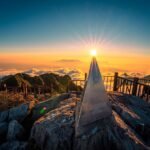 FansipanVietnam's highest peak, 3,143 metres above Sapa: a record-breaking cable car, a mountain train from town and a…
 Moana SapaA hillside photo park on the edge of Sapa town, with a Bali-style gate, giant hand and swings…
Related tours

Sapa · Jeep
Sapa Jeep Tour: O Quy Ho Pass, Silver Waterfall & Rong May Glass Bridge
4.9 (25 reviews)
From $50
$45
per adult

Sapa · Female Riders
Sapa Motorbike Tour with Female Riders: O Quy Ho Pass & Glass Bridge
4.9 (25 reviews)
From $50
$45
per adult

Sapa · Jeep
Sapa 2-Day Open-Air Jeep Adventure: Villages, Waterfalls & Cloud Hunting
From $239
$227.05
per adult

Sapa · Jeep
Sapa 3-Day Open-Air Jeep Adventure: Villages, Waterfalls, Cat Cat Trek & Fansipan
From $329
$312.55
per adult
Frequently asked questions
When is the best time to see the sea of clouds in Sapa?
The best chance is on cool, still mornings from October to April, with October to December often bringing the clearest skies. It depends on the weather and can never be guaranteed.
Where is the best place to see the sea of clouds near Sapa?
O Quy Ho Pass, especially the Lai Chau side of the Tram Ton summit and Rong May Glass Bridge, and the summit of Fansipan. Ham Rong mountain and the Muong Hoa Valley viewpoints near town can also show clouds in the valley.
What does săn mây mean?
Săn mây means "cloud hunting": going out early, usually to a high viewpoint, to look for a sea of clouds (biển mây). In Sapa, October and November are called the "fifth season" because of it.
What time of day is best for cloud hunting?
Early morning, after a clear, calm night, is the classic time. Late afternoon can also work as the air cools again.
Is the sea of clouds guaranteed on a Sapa tour?
No. The sea of clouds depends on the weather and cannot be guaranteed. Tours still run to the viewpoints, which have wide mountain views on a clear day.
Why is it foggy in Sapa instead of a sea of clouds?
Fog and the sea of clouds are often the same cloud layer. Inside the layer you only see white; from a viewpoint above it, you see the sea of clouds.
Sources
We check facts against these sources. Rules and prices change, so confirm anything important with the official source before you travel.
- Wikipedia – Sea of clouds (formation, temperature inversion) (accessed 29 Nov 2026)
- Nhân Dân – Đón "mùa thứ năm" trên đỉnh Fansipan (28 Sep 2022)
- Báo Lào Cai – Kỹ nghệ "săn mây" (2 Dec 2023)
Spotted something out of date? Tell us on WhatsApp